
Introduction: a multidisciplinary artist attuned to his times
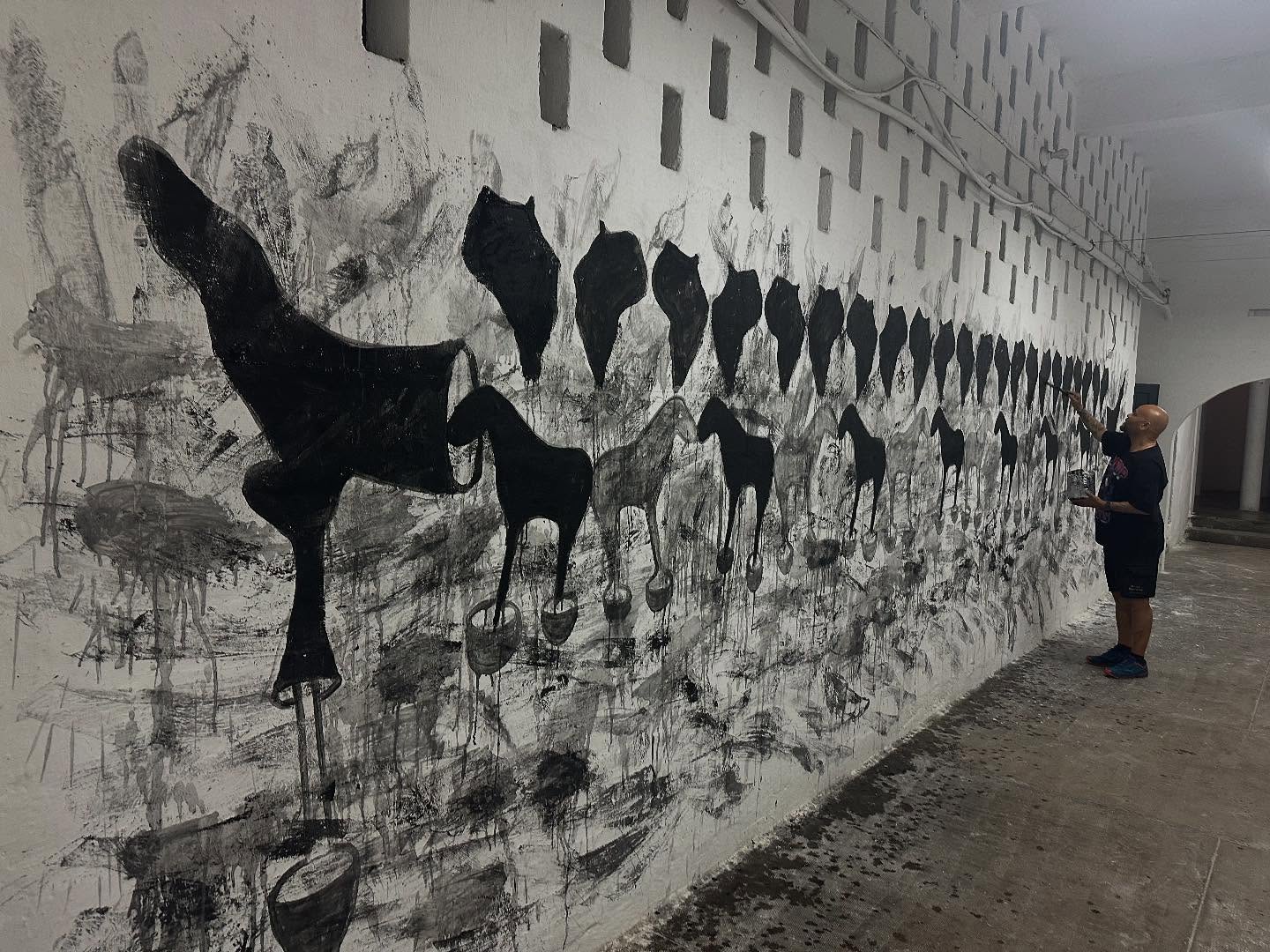
Hamza Boussedra — a multidisciplinary artist, film director and advertising creative — invites us, through his exhibition Bousbir, to make our way into the meanders of an urban space in decay. Presented in the Résidence Assayag in the heart of Casablanca, this event goes beyond the mere bounds of visual art to become a dialogue between collective memory, historical erosion and personal introspection.
Active in the field of visual communication, Hamza combines his advertising skills with an artistic sensibility, offering works that question the viewer as much as the space they inhabit.
The aesthetic of the fragment: capturing memory in flight
The exhibition Bousbir explores the remains of an emblematic Casablanca district, once vibrant, today in the grip of a slow effacement. Through photographs printed on transparent materials, broken mirrors and plays of light, the artist creates an aesthetic of the fragment, in which every visual element becomes a metaphor for disintegration.
The centrepiece of the exhibition, a photograph behind broken glass, sums up this idea. It invites the viewer to contemplate a delicate balance between resilience and surrender. The shattered glass, at once barrier and window, brings out a duality: that of a district suspended between past and present, between destruction and persistence.
The Résidence Assayag: a symbolic setting
The choice of the Résidence Assayag, an emblematic Art Deco building in Casablanca, reinforces the symbolic weight of this exhibition. The place, witness to an age of modernisation and of colonial influence, becomes a ground for dialogue between the architectural history of the city and the contemporaneity of the works.
The juxtaposition of the raw aesthetic of Bousbir’s modern ruins with the timeless elegance of Art Deco underlines the tension between heritage and change. Hamza thus manages to build a bridge between past and present, prompting reflection on urban and social transformation.
An ethical and artistic commitment
Hamza Boussedra’s approach stands out for a deep artistic ethic. Rather than romanticising or stigmatising decline, he chooses to observe contemporary ruins with an almost documentary neutrality. His works are not laments but testimonies, inviting the viewer to fill the narrative gaps left by the silence of the places.
The use of materials such as broken mirrors and reflective surfaces transcends the mere frame of photography. These objects become agents of reflection, literal and metaphorical, allowing the viewer to see themselves in the fragments of a space in transformation.
Conclusion: a voice for the forgotten
With Bousbir, Hamza Boussedra establishes himself as an essential voice in the contemporary Moroccan art scene. He redefines the way art can capture the ephemeral essence of spaces and memories in flux.
His exhibition, at once poetic and analytical, offers an immersive and introspective experience in which the viewer is invited to confront the idea of loss and transformation. At a time when cities are changing fast, often at the expense of their history, Hamza reminds us that in ruins there are always traces left to decipher, memories to honour.
This exhibition is an invitation to see beyond appearances and to enter into dialogue with the places we inhabit and abandon. Bousbir is not simply an exhibition: it is an act of memory, a meditation on the ephemeral and a tribute to the passing of time.


💬 Commentaires
No comments yet. Be the first!