
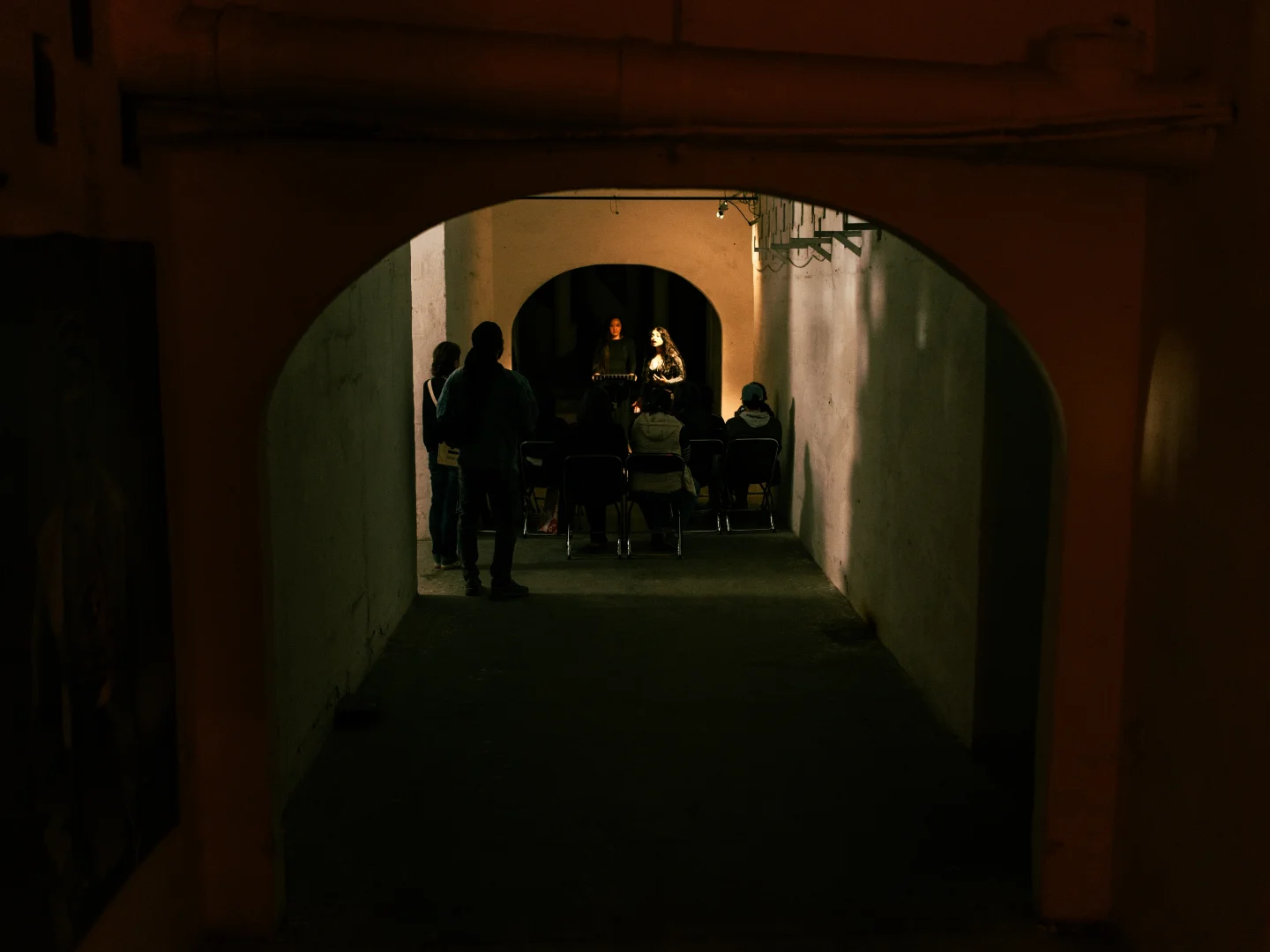
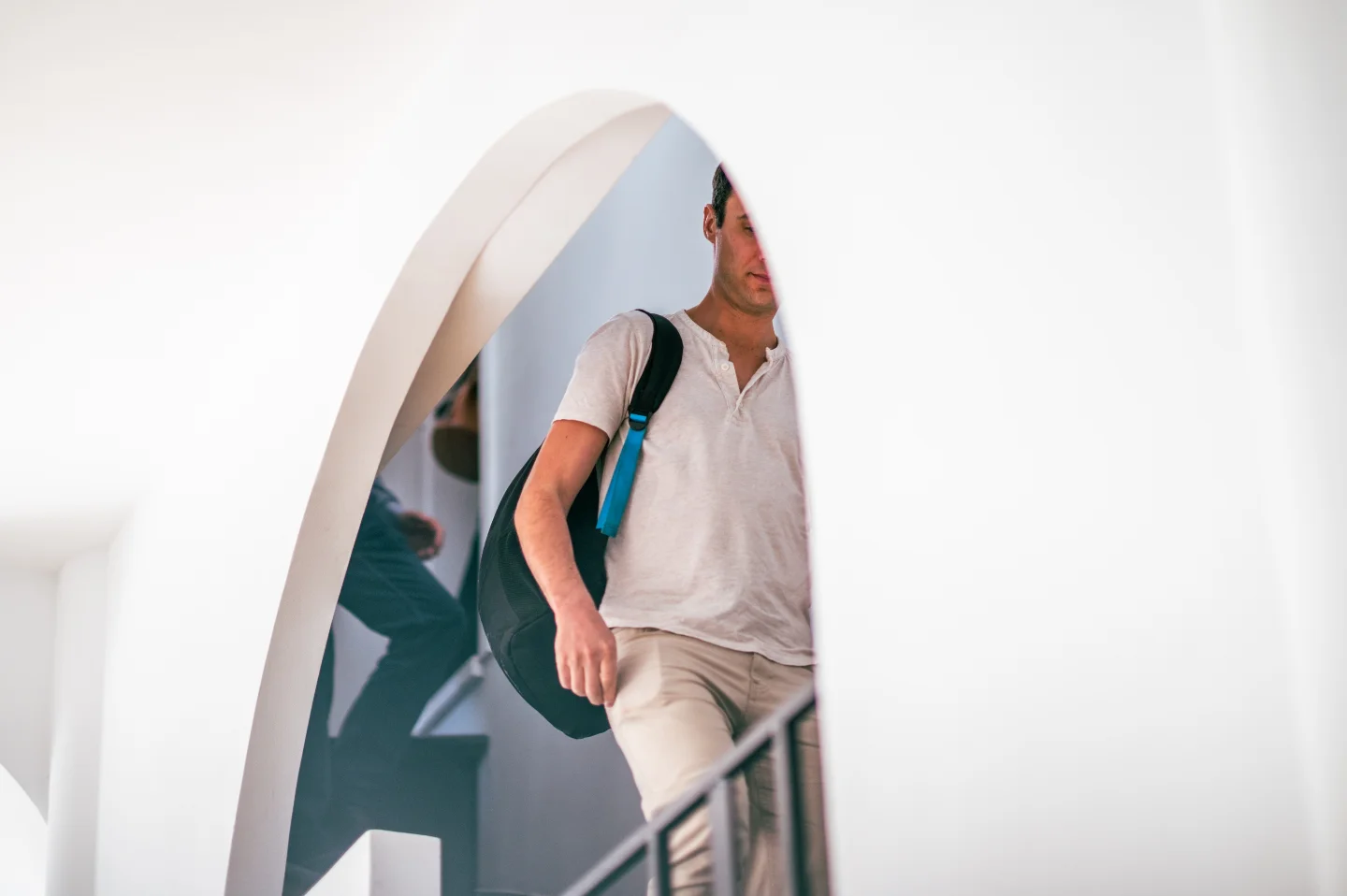
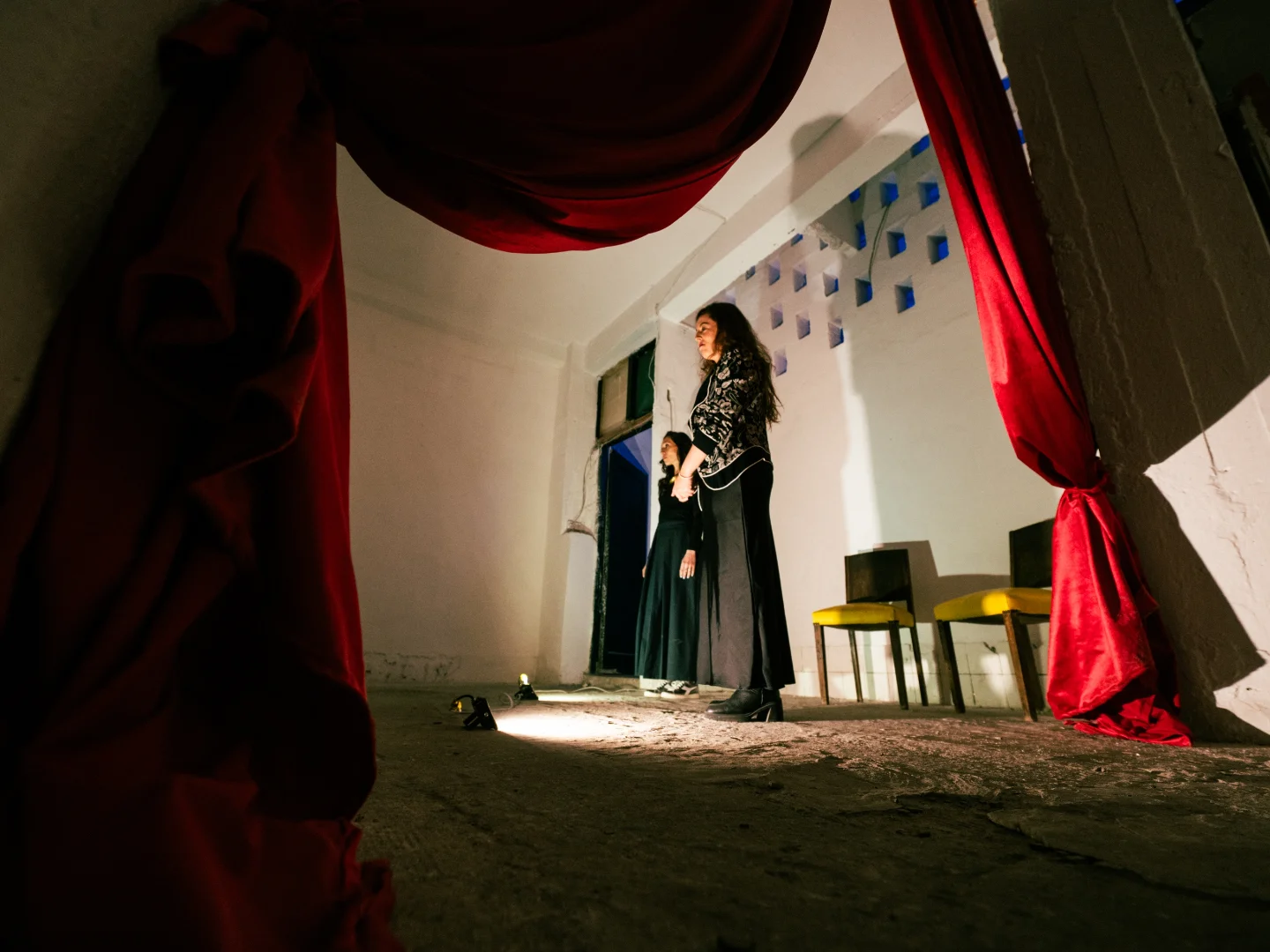
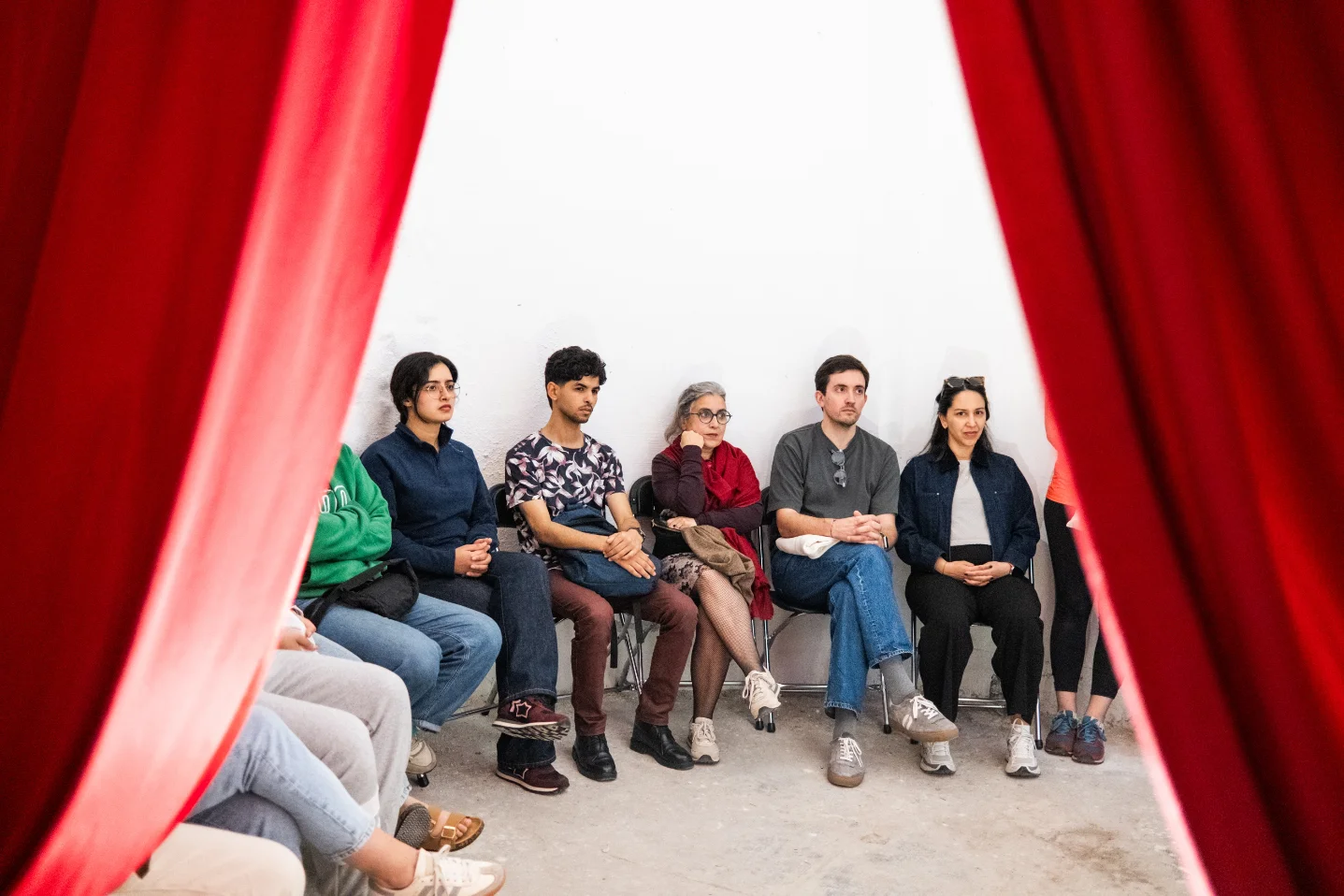
A residential building is not open to visitors. For two spring days, this one let itself be crossed: on 4 and 5 April 2026 the 2nd Shaeirat Biennale brought to the Assayag the showcase of its “Poetic Labyrinth” — five bilingual Arabic/French poetry performances, and an audience moving from one room to the next.
Shaeirat, meaning the poetesses
Shaeirat — شاعرات — means “poetesses”. The project carries that name because it is its programme: to put Arabic poetry on stage, spoken by those who write it, rather than read at a table. The second Biennale opened in Rabat on 26 March 2026 and unfolded over some ten days between Rabat and Casablanca, with the support of the British Council. The last two days took place here.
The showcase is the outcome of two intensive residencies held at the American Arts Center: “Writing poetry for the stage”, directed by Soukaina HabibAllah, and “Performing poetry with actors”, directed by Henri Jules Julien. What played out in the building was therefore not a reading, but the closing of a staging workshop.
Five duos, two languages
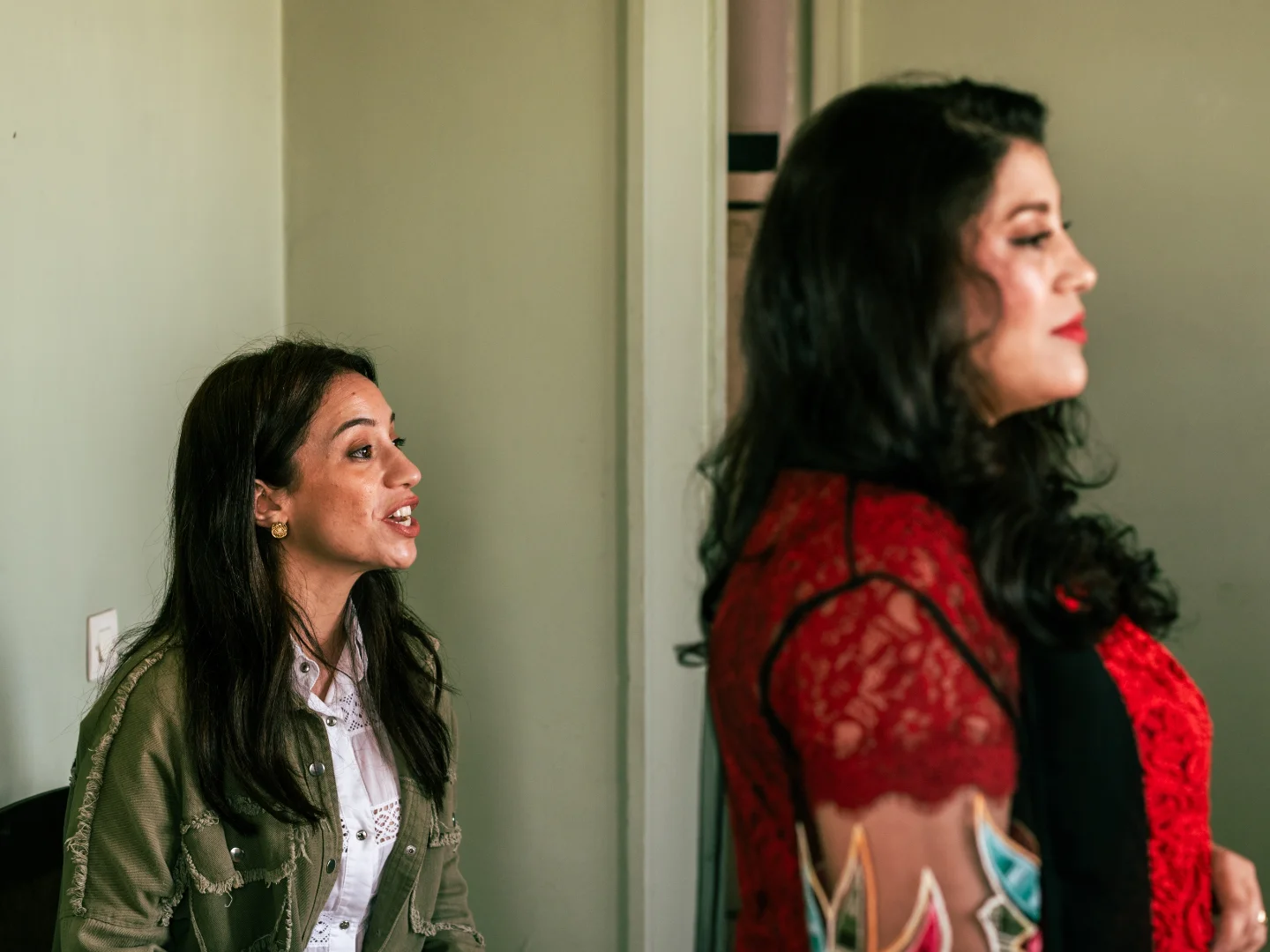
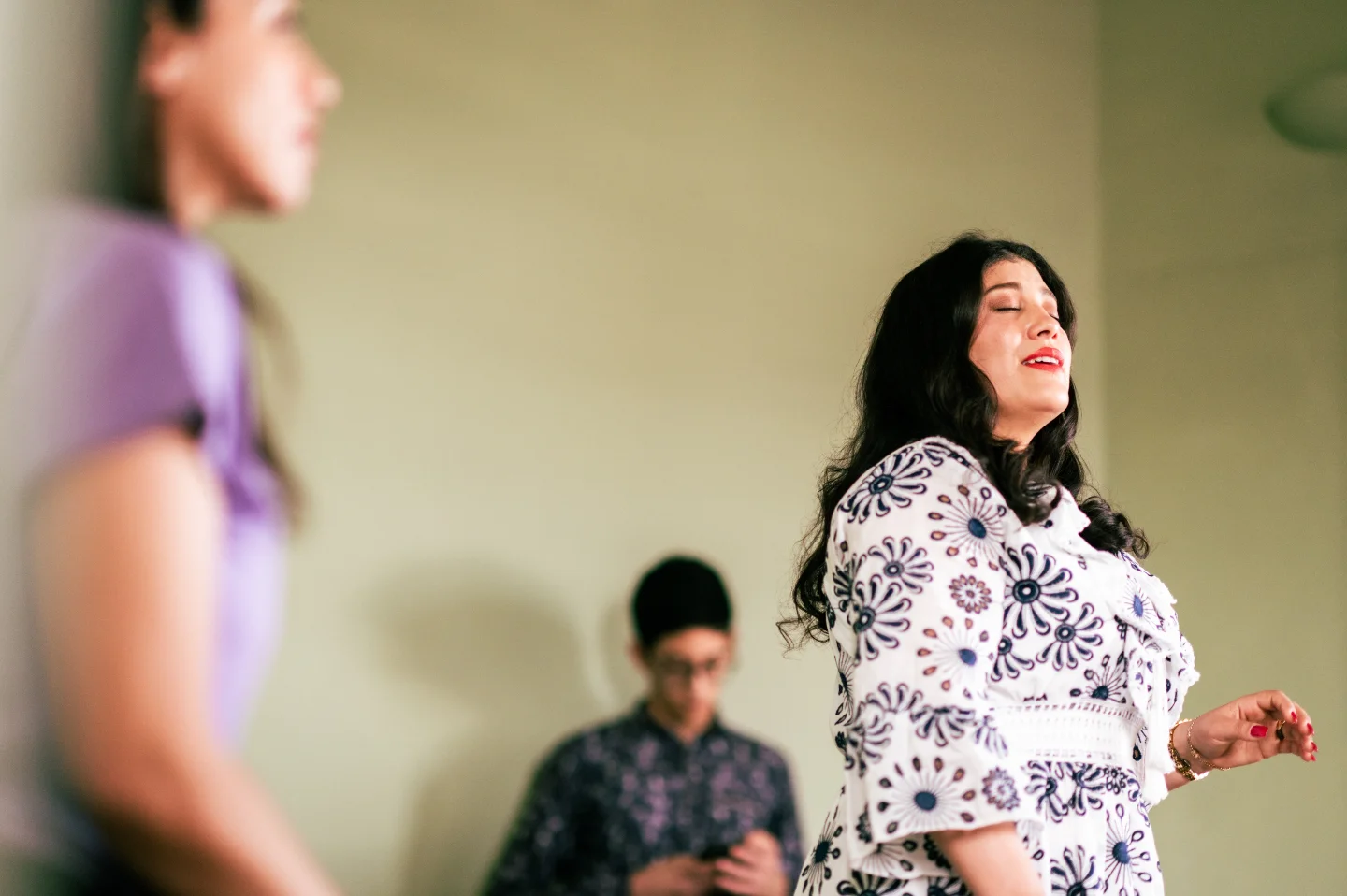
Each performance paired a poet with an actor — Arabic and French relaying from one mouth to the other:
- Mohammed Kebdani & Othmane Benielloun-Touimi
- Farid Abderrahim & Yassine Sedki
- Khadija Elmassoudi & Selma Naguib
- Safaa Isaad & Emna Zina-Thabet
- Nada Raheeaee & Hélène Tran
A labyrinth that already existed
The word “labyrinth” is not a metaphor chosen afterwards. The device consists in moving the audience: you do not settle into a hall, you follow a route, and each stage has its place.
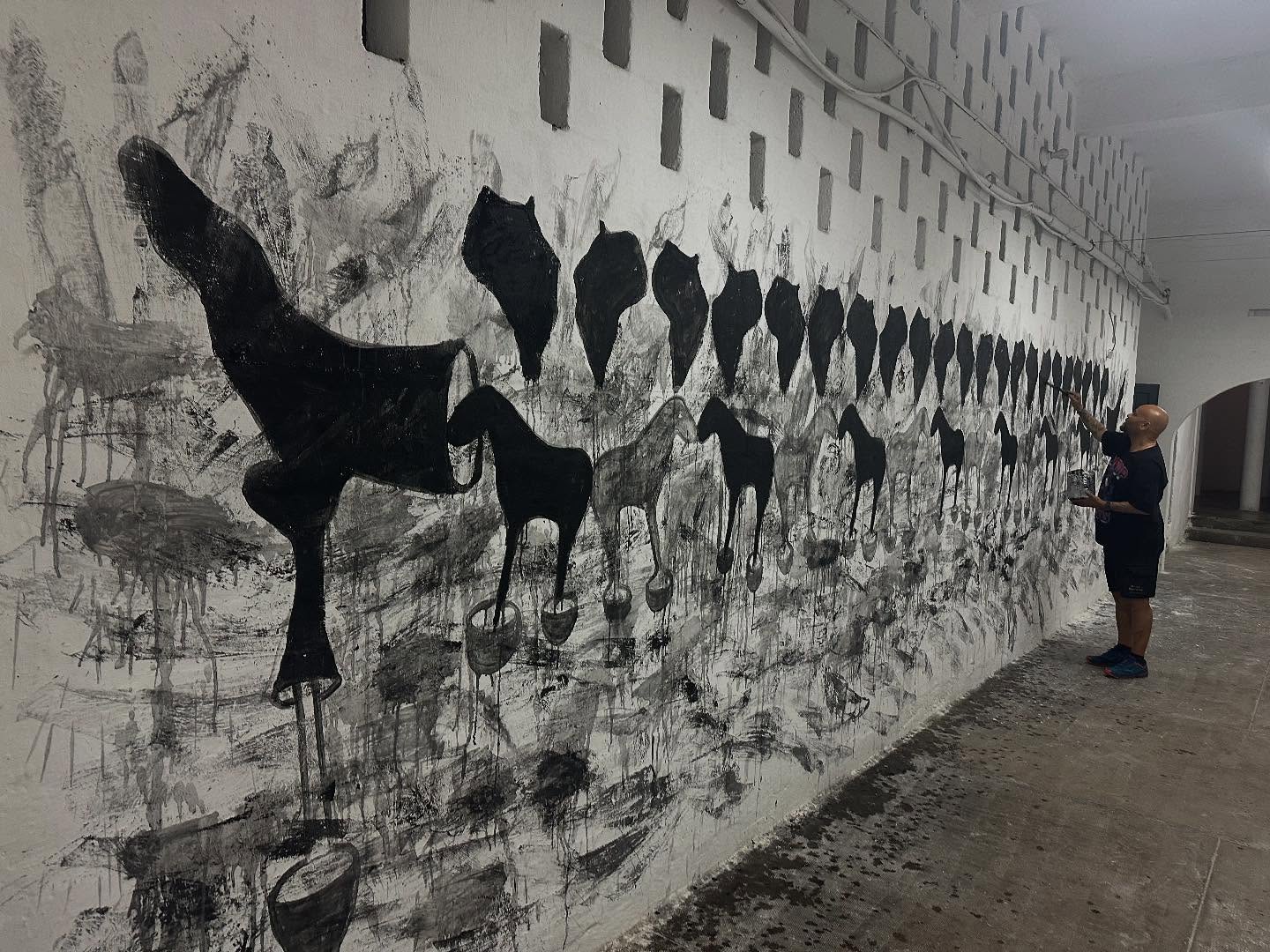
The Assayag is already built that way. Three separate bodies, each with its own stairwell, passages linking them high up, basements, terraces. To which is added what no plan shows: a building of nearly a hundred years is never in a single state. The photographs show, a few metres apart, rooms repainted in water-green with their terrazzo floors intact, and rooms with fallen plaster, bare walls, red floors — both of them turned into a set without anything being built.


The same corridor
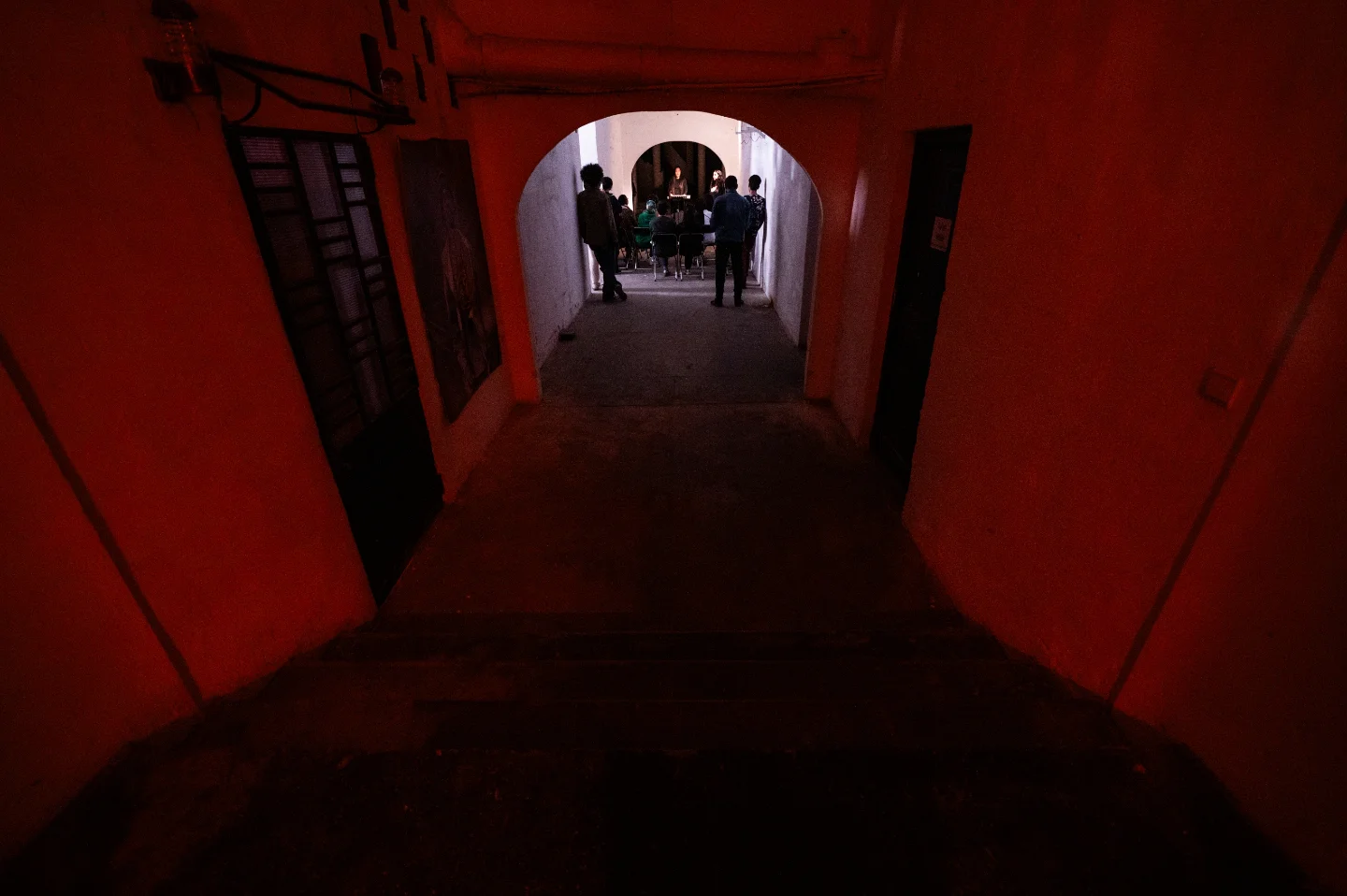
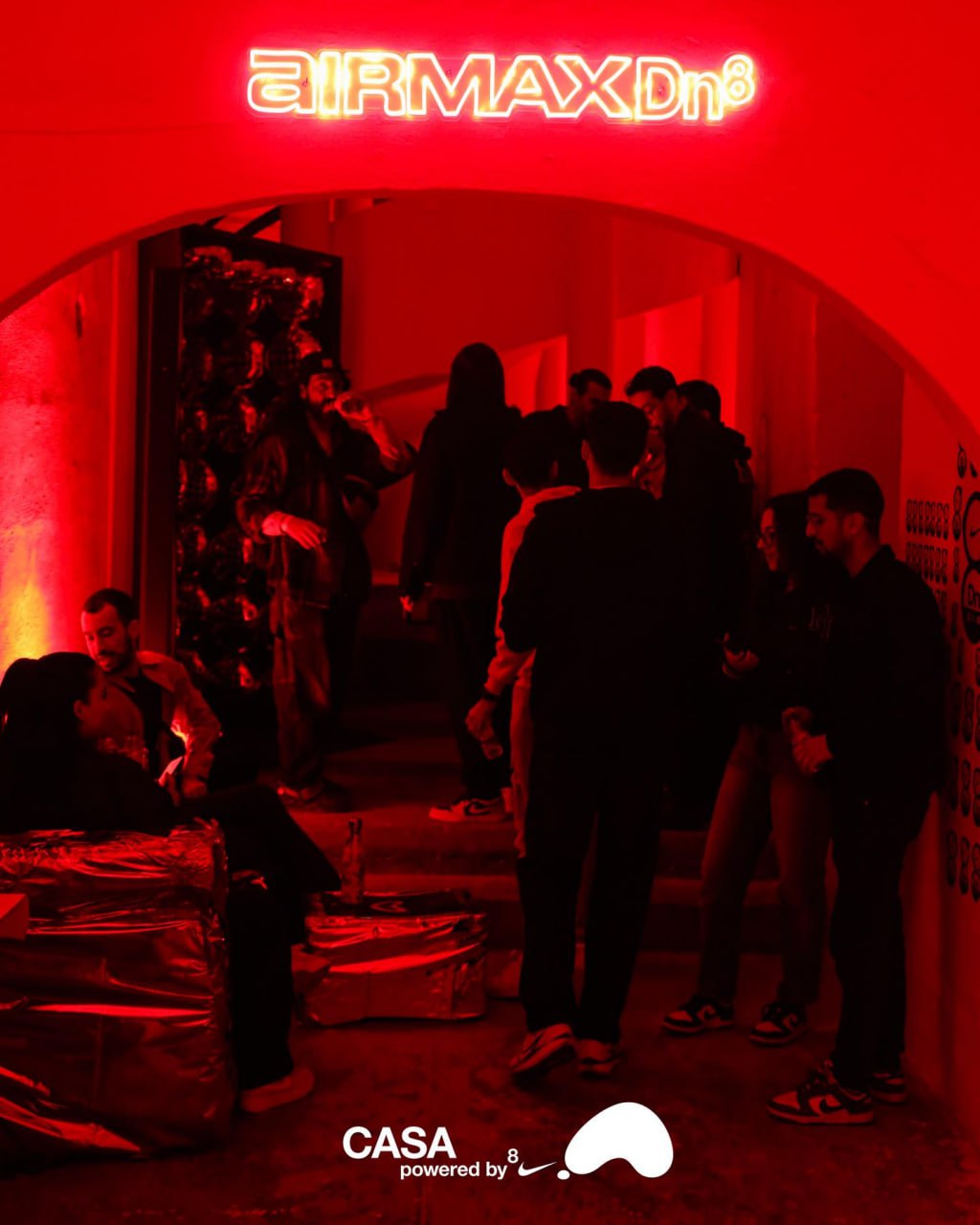
One photograph from those two days stopped us. The vaulted corridor where the audience sits and listens is exactly the one we published recently, unrecognisable, drowned in red light: the Air Max night of March 2025, in the same cultural space Chez Marius. Same arch, same proportions, same doors.
A year and a lighting decision separate the two images. Between them lie the incinerator, the boiler room and the water tanks for which these rooms were dug in 1930. Machinery is built; a century later, an audience is let in. Nothing in the building was redone for that — it is the programme that changes, not the walls.
A residential building among the institutions
The list of partners for these two days is worth reading to the end: Institut français du Maroc, Institut français de Casablanca, British Council, American Arts Center, Tatmin Creative Hub — and L’Immeuble Assayag.
A residential co-ownership stands there on the same footing as national cultural institutes. This is not a courtesy: the rooms belong to the co-owners, who voted to open them to culture and who live upstairs. Every event is played out in that balance — a venue that receives, a home that sleeps.
See the photographs
The thirty-five photographs of the two days are gathered in an album in the Gallery, with the venue card.

Sources: posts by the Shaeirat Biennale and The Olive Writers (May–June 2026), from which the photographs come; shaeirat-project.com. The dates are those of the agenda of the Institut français de Casablanca, which announces the “Labyrinthe poétique – Biennale Shaeirat” at the close of the ten days opened in Rabat on 26 March 2026. Photographs: Shaeirat Biennale.

💬 Commentaires
No comments yet. Be the first!