
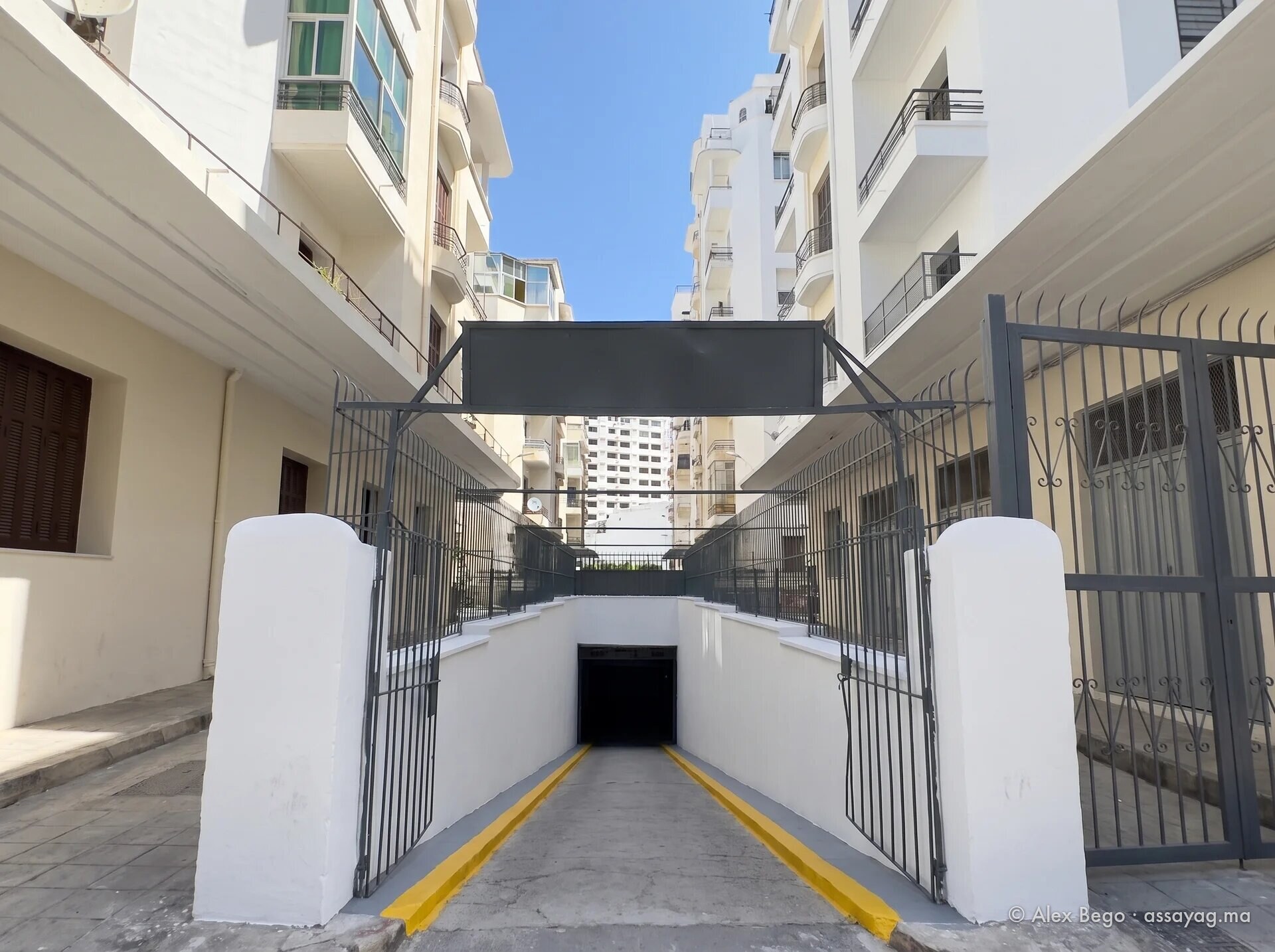
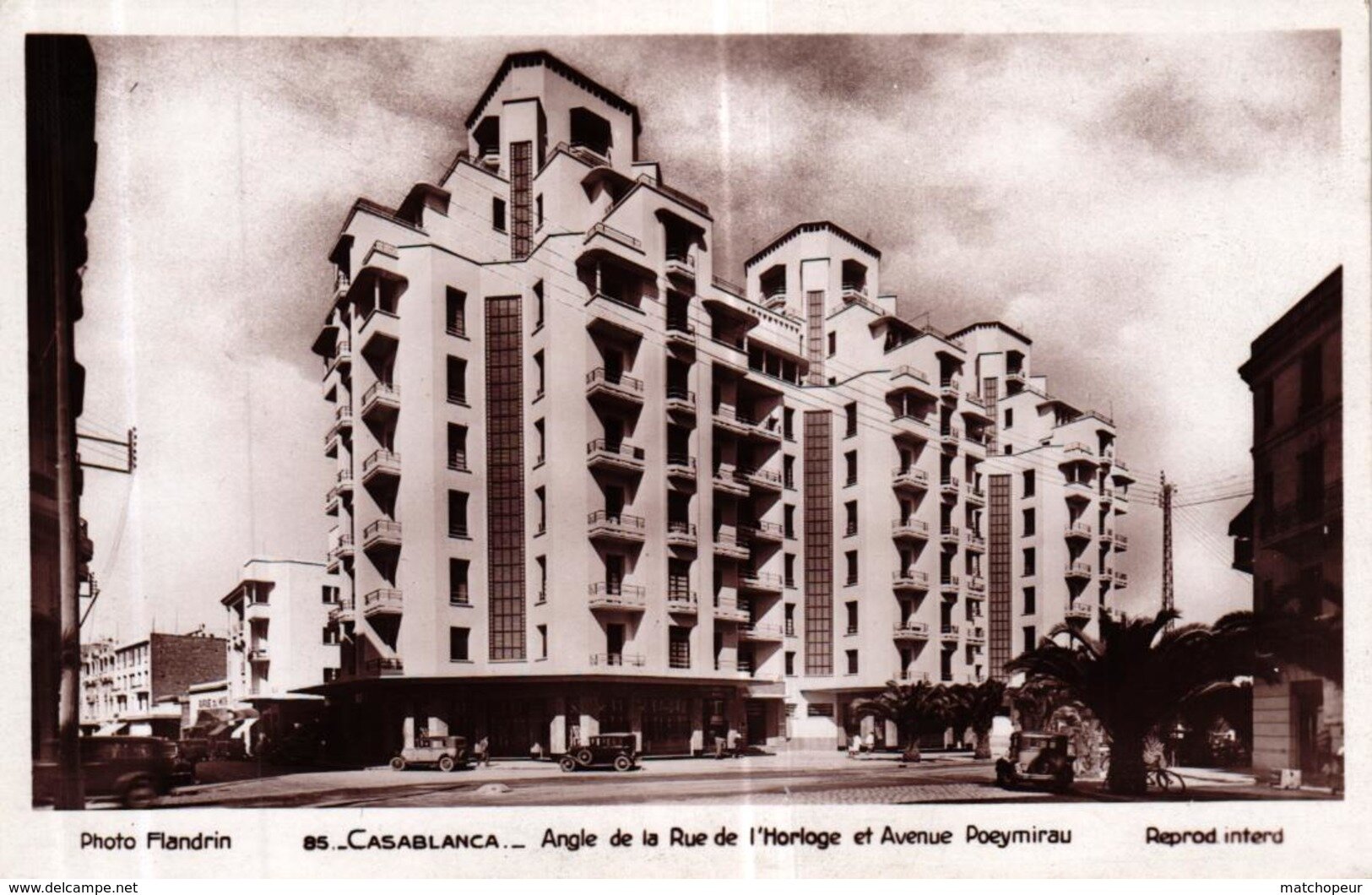
People look at the Immeuble Assayag from above: the three towers, the stepped terraces, the tall glazed screens. The most surprising thing may be underneath. In designing the building, Marius Boyer provided a basement for the residents' cars — in a city that, at the time, counted only a few dozen of them.

What Rachid Andaloussi says
Invited by Médias24 to guide a walk through modern Casablanca, the architect Rachid Andaloussi — a founding member of Casamémoire, which he chaired from 1998 to 2003 and again from 2012 to 2019 — begins his itinerary with the Assayag. And it is the basement he singles out.
"If we are to speak of the architecture of Casablanca, we must mention the Assayag building, on boulevard Hassan Seghir. […] it is one of the first buildings in the world whose design provided a basement for a car park, at a time when Casablanca had only a few dozen cars on its streets."
"Visite guidée. Le Casablanca de… Rachid Andaloussi", interview by Hayat Gharbaoui, Médias24, 4 February 2022. Translated from the French.
The detail carries more weight than it first appears. An underground garage is expensive: you have to dig, shore up, ventilate, drain. Building one for a clientele that does not yet exist is a bet on what the city will become.

An idea being born in Europe at the same moment
Boyer did not invent the car stored under the building. The idea was in the air while he was drawing. In his history of buildings designed for the motor car, the historian Paul Smith puts it this way: for rental apartment buildings, architects were beginning to provide spaces in the basement or on the ground floor for residents' individual cars.
The second half of the 1920s saw Paris covered in "hotels for automobiles", large-capacity collective garages: Robert Mallet-Stevens' Alfa-Roméo garage on rue Marbeuf in 1925, the Marbeuf garage by Albert Laprade and Léon Bazin between 1925 and 1928, and La Motte-Piquet by Robert Farradèche between 1925 and 1929.
In other words: just as the Assayag was rising, Europe was only beginning to house its cars within architecture. Boyer did the same — but in Casablanca, and for residents who, for the most part, did not yet own a car.
What "first" means here
Precision matters. "One of the first buildings in the world" is the assessment of an architect who knows his city and his subject, not an entry in a register: nobody keeps a world ranking of the first apartment car parks, and earlier basements for cars could no doubt be found somewhere.
What can be verified lies elsewhere, and is more than enough. At the date it was designed, the feature was new in Europe itself. It was installed in a city whose motor fleet was then counted in dozens of vehicles. And it was planned from the drawing, not added later. Boyer was not fitting out a building: he was anticipating a way of life.
“Garage, immeuble Assayag”: the basement in use
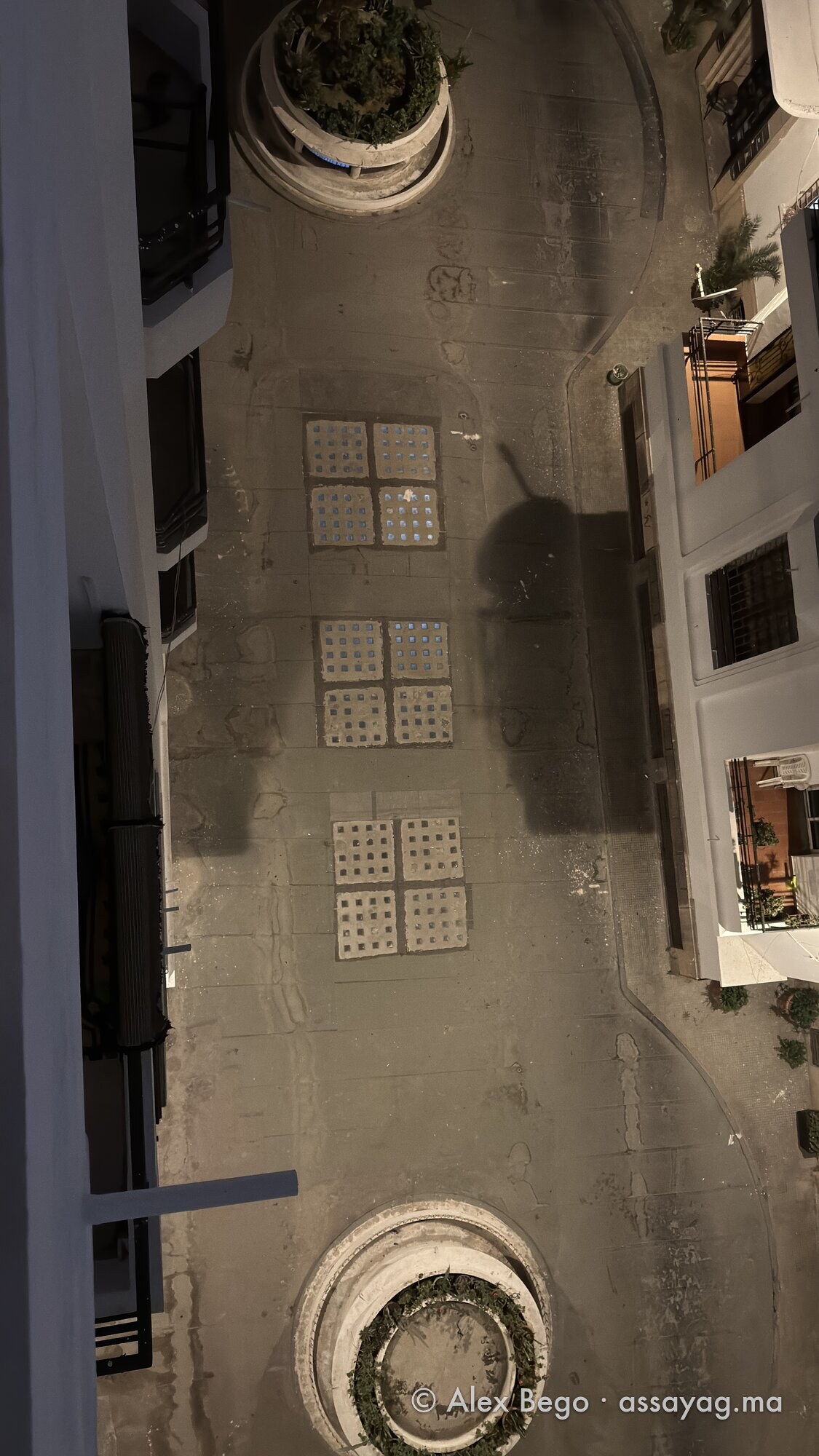
The press shows the garage in use from the very first years. On 26 July 1935 a small ad in La Vigie marocaine, in the motoring column, offered “2 Buick C. I. 2 pl. spider, état neuf” — probably a saloon and a two-seater spider, “as new” — and gave as its address “Garage, immeuble Assayag, 115, rue de l’Horloge”. A year after the first tenants moved in, the basement already had an address of its own, and cars were being shown there for sale.
Six months later, on 23 January 1936, the same paper reported a “commencement d’incendie”, the start of a fire: “This morning, in the garage near the Assayag building, rue de l’Horloge, a car caught fire after a backfire in the carburettor.” The firemen arrived at once, the fire was soon put out, and “the damage to the car is slight”. The paper writes “near”, not “in” the building: it may have been another garage — the same street had at least one, the Garage du Marché at no. 81. But it is precisely onto the rue de l’Horloge, today’s rue Allal Ben Abdellah, that one of the two ramps of the Assayag car park opens.
The rest of the machine
The car park is not an isolated curiosity. It belongs to a set of services that made the Assayag, for its time, a very well equipped building. In the same interview, Andaloussi mentions a ventilation system for the staircases and fitted kitchens.
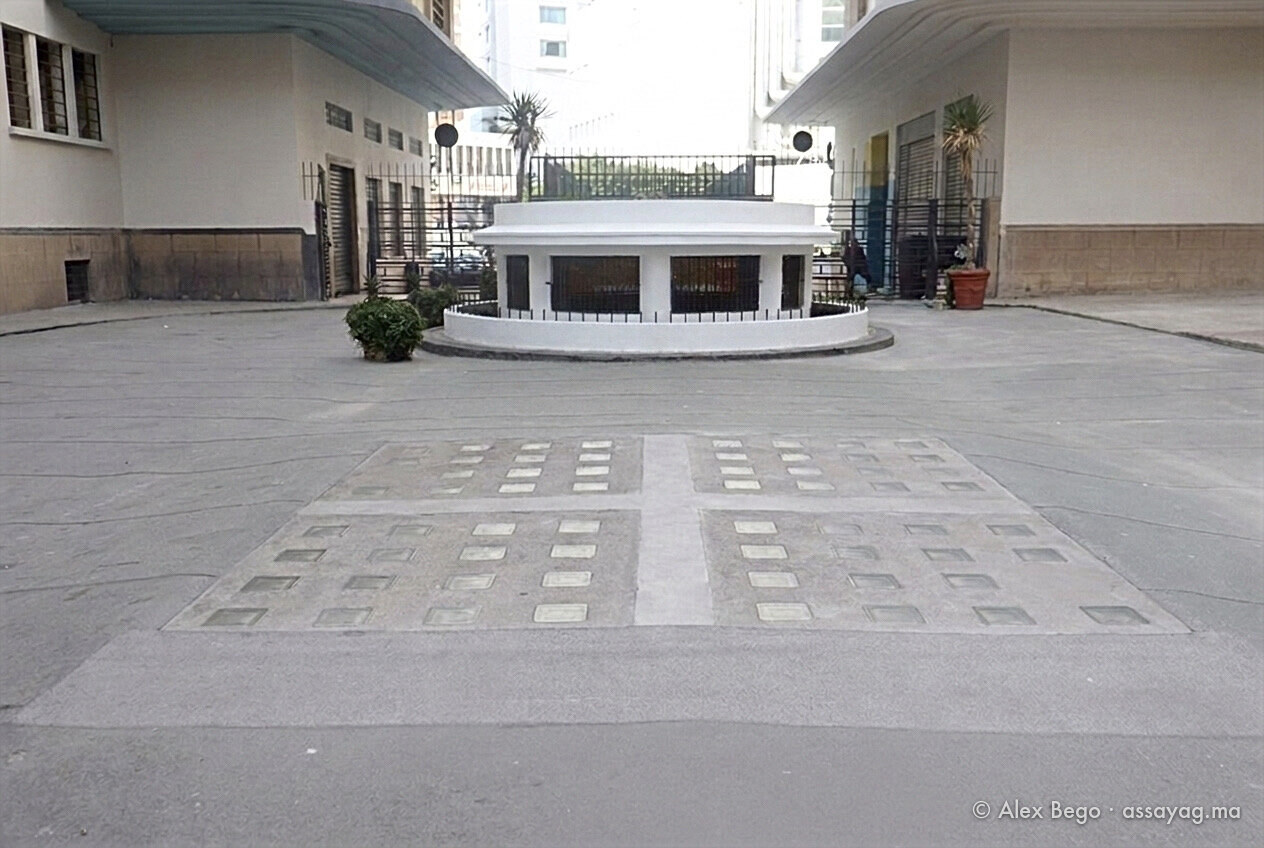
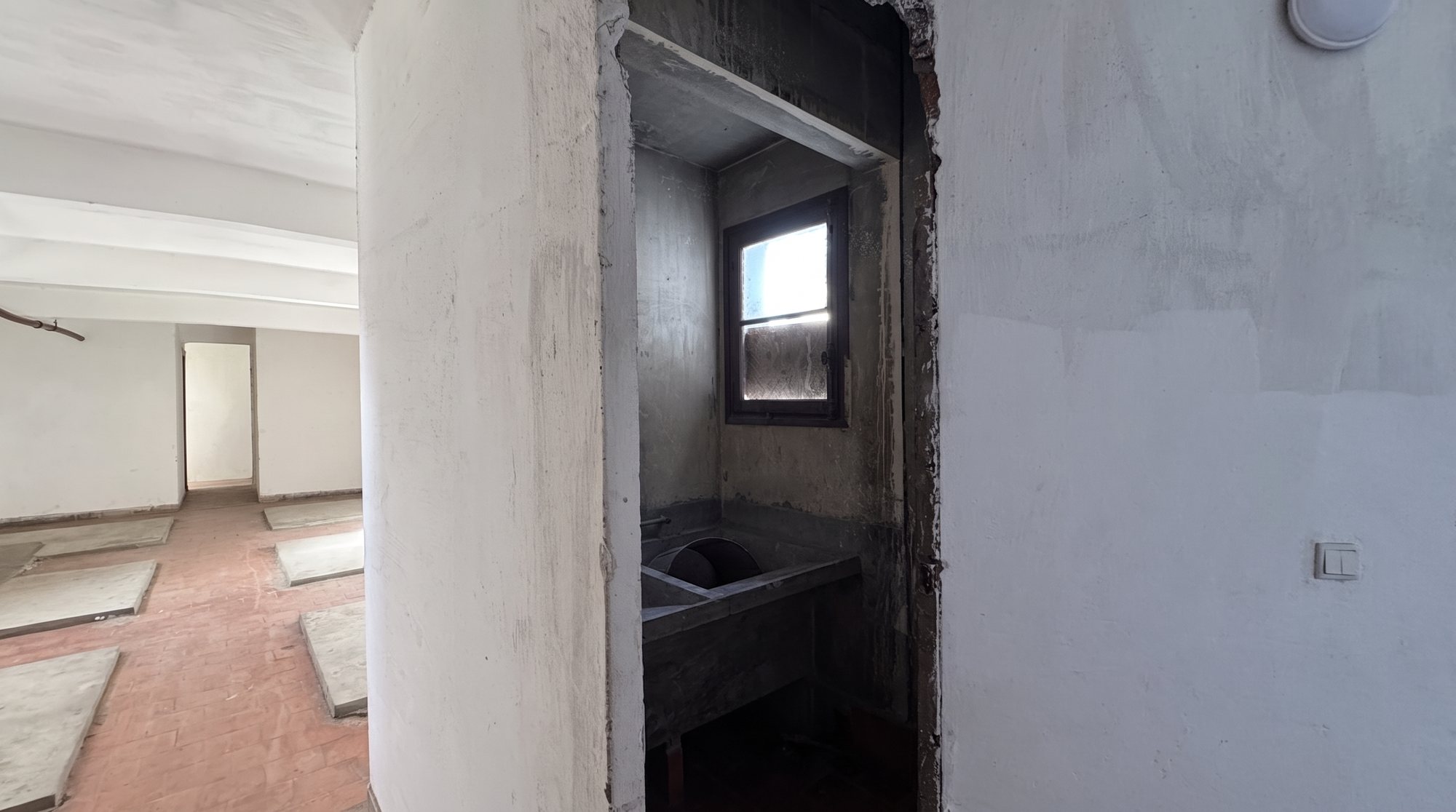
Beneath the building, the basements housed the incinerator, the boiler room and the water tanks — these are the rooms that became, almost a century later, the cultural space Chez Marius. A refuse chute serves the floors. And at the very top, on the eighth level, the communal laundries received water directly into concrete tanks, with drying terraces between the towers.
Seen this way, the building reads differently. Waste goes down, laundry goes up, cars are parked below, air moves through the glazed screens. Every flow has its own path.
A building conceived as equipment
The Assayag is often presented as a fine Art Deco silhouette. It is one. But the façade is only the visible part of a technical argument: how do you house dozens of households stacked over ten levels comfortably, in a hot and windy city, in 1930?
The basement for cars is the boldest answer to that question, because it is the only one that met no present need. The other services were useful from day one. That one was waiting for its era.
Sources: Médias24, "Visite guidée. Le Casablanca de… Rachid Andaloussi", 4 February 2022, interview by Hayat Gharbaoui; Paul Smith, "Un siècle d'immeubles pour automobiles", Pavillon de l'Arsenal, 2 October 2021. La Vigie marocaine, 26 July 1935 (small ad) and 23 January 1936 (“Commencement d’incendie”). Description of the basements and services from residents of the building.

💬 Comments
No comments yet. Be the first!