
On 28 May 2023 two journalists from Le360, Qods Chabâa and Khadija Sebbar, went down into the basements of the Assayag with a camera. The Heritage Days had just opened to the public rooms nobody had seen for decades. On camera, two residents explain how a 1930 plant room became a venue — and what they hope to do with it.
This report is, to date, the only filmed document in which the building speaks for itself.
Report by Le360, 28 May 2023 — Qods Chabâa and Khadija Sebbar. Video: Le360, in French.
The first voice: we came to ask
Pierre Pilven is the building's syndic. His first sentence is not a project, it is a procedure:
“Here, in fact, we wanted to present ourselves to the syndic's office, precisely to ask the residents whether they agreed that we might use the common parts of the building, which are magnificent, to host artists all year round.”
The order of things matters. You do not take the common parts: you ask for them. And the answer does not come from an office, it comes from a vote:
“They voted at a general meeting of the co-owners, and they gave us, in inverted commas, carte blanche to bring the place to life.”
The reasoning behind that vote fits in one sentence: to bring a district back to life you need “somewhat emblematic buildings” where something is offered. The Assayag was not chosen as a set; it was chosen as a known address.
What the residents paid for
Then comes the part rarely quoted, because it is not spectacular:
“For the moment we have managed with our small means. It is the community of residents who contributed, through their contributions to the syndic, so that we could bring the basement up to standard — a truly magnificent place.”
In other words: putting the rooms back in order was funded neither by a patron, nor a foundation, nor the city, but by the service charges — the money residents pay each month for the lift, the stairs and the light bulbs. Part of that money went to a cultural space. That is a decision of a general assembly, not a communications gesture.
What follows is named plainly as work still to be done: to make the project last and give it visibility beyond the national scale, they will have to seek patrons, and support from the city, the wilaya and the region.
A year later, L'Opinion would name Ahmed Idrissi Kaitouni, president of the co-owners' board, and Alexis Logier, a “fervent cultural champion” of the building, among “the initiators and others in charge of this venture”, and would confirm that bringing the basements up to standard had relied largely on the co-owners' contributions.
A venue inside a network
The syndic then describes what makes the project possible: not resources, but people. He cites the neighbours of Central 88 — the artists' residency set up in Casablanca's Central Market — a theatre company from Rabat whose work is turned towards the social, and performers of international standing. A venue does not open on its own; it opens because other venues already exist around it.
He also mentions the figures met through Monique Eleb — architects and figures of Moroccan culture, among them her friends Rachid Andaloussi and Hafid El Awad — who came to see what was happening in these basements, and whose regard amounts, he says, to “moral backing”. One detail is poignant: Monique Eleb, who lived in the building and had written it into architectural history, had died in Paris two days before this filming, on 26 May 2023. The report pays tribute to her.
The second voice: restoring 1930
Ahmed Idrissi Kaitouni, president of the co-owners' board, does not speak of programming. He speaks of the building:
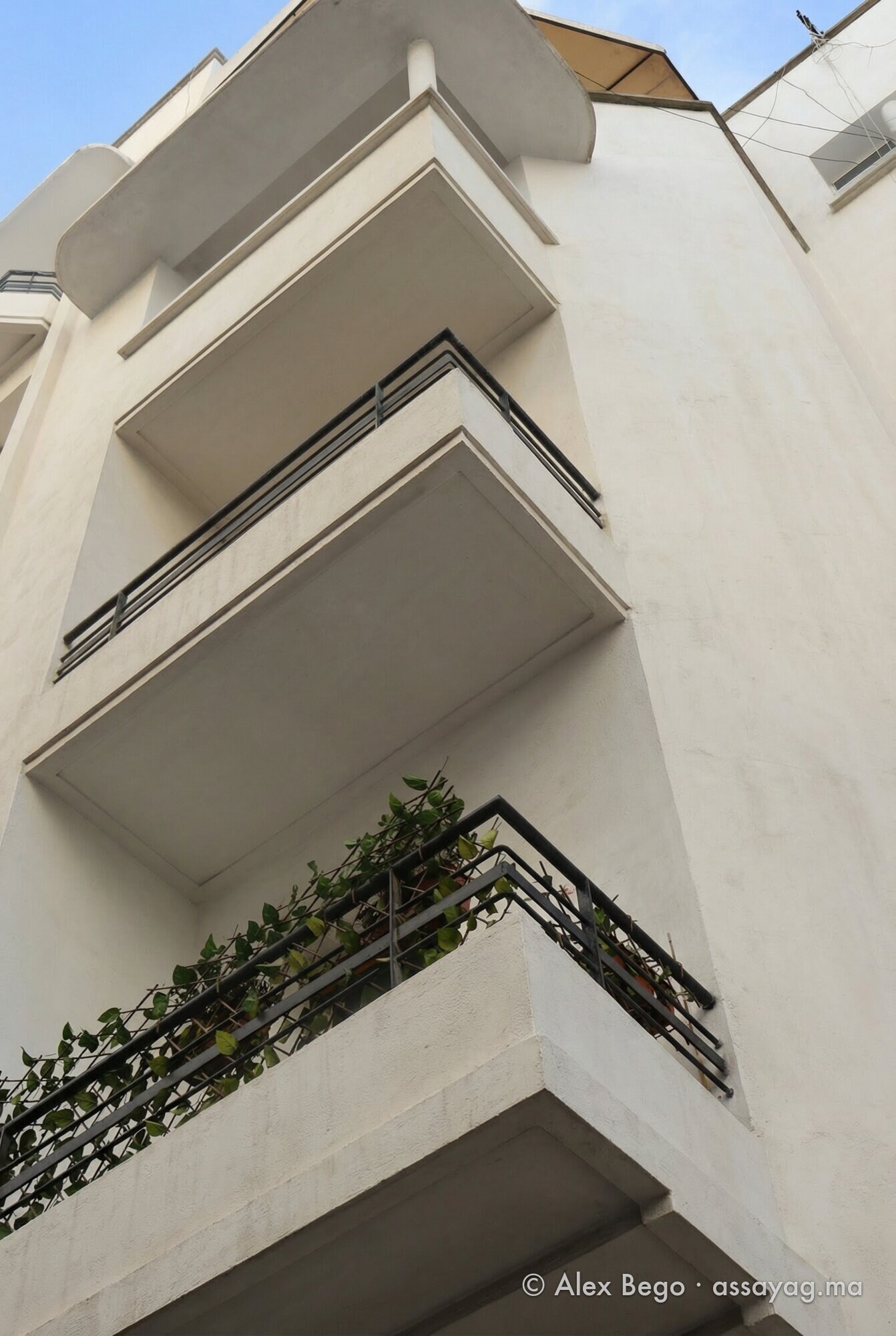
“We are a team of owners in love with this unique building, and our aim, beyond management, is to rehabilitate it: to try to restore the building as it was built in 1930 by the great architect Marius Boyer — and to rehabilitate it too in the eyes of the people of Casablanca, and notably in the eyes of the city authorities.”
Two rehabilitations in one sentence, and that is no figure of speech. The first is material: give the building back its 1930 state. The second is reputational: give the building back its place in the city's regard. A building classified A+, he recalls, “is emblematic of Casablanca and above all of the architecture of a period” — that of the emergence of modern Casablanca, “the beginning of modernity in Morocco”.
The city where all Morocco met
The president of the board then adds an idea that is his own, and that reaches well beyond the building: Casablanca was the first city where people from the different regions of Morocco found themselves together. Fassis and Soussis, Berbers of the Middle Atlas, Jeblis: an integration that begins there, in the city going up. That heritage, he says, is not only made of stone.
His last sentence is an owner's pride, and it holds up:
“This building, which is very modern, is ninety years old, and it has nothing to envy in what is being built today. I would even say it is far more beautiful than many luxury buildings put up recently.”
What this report adds
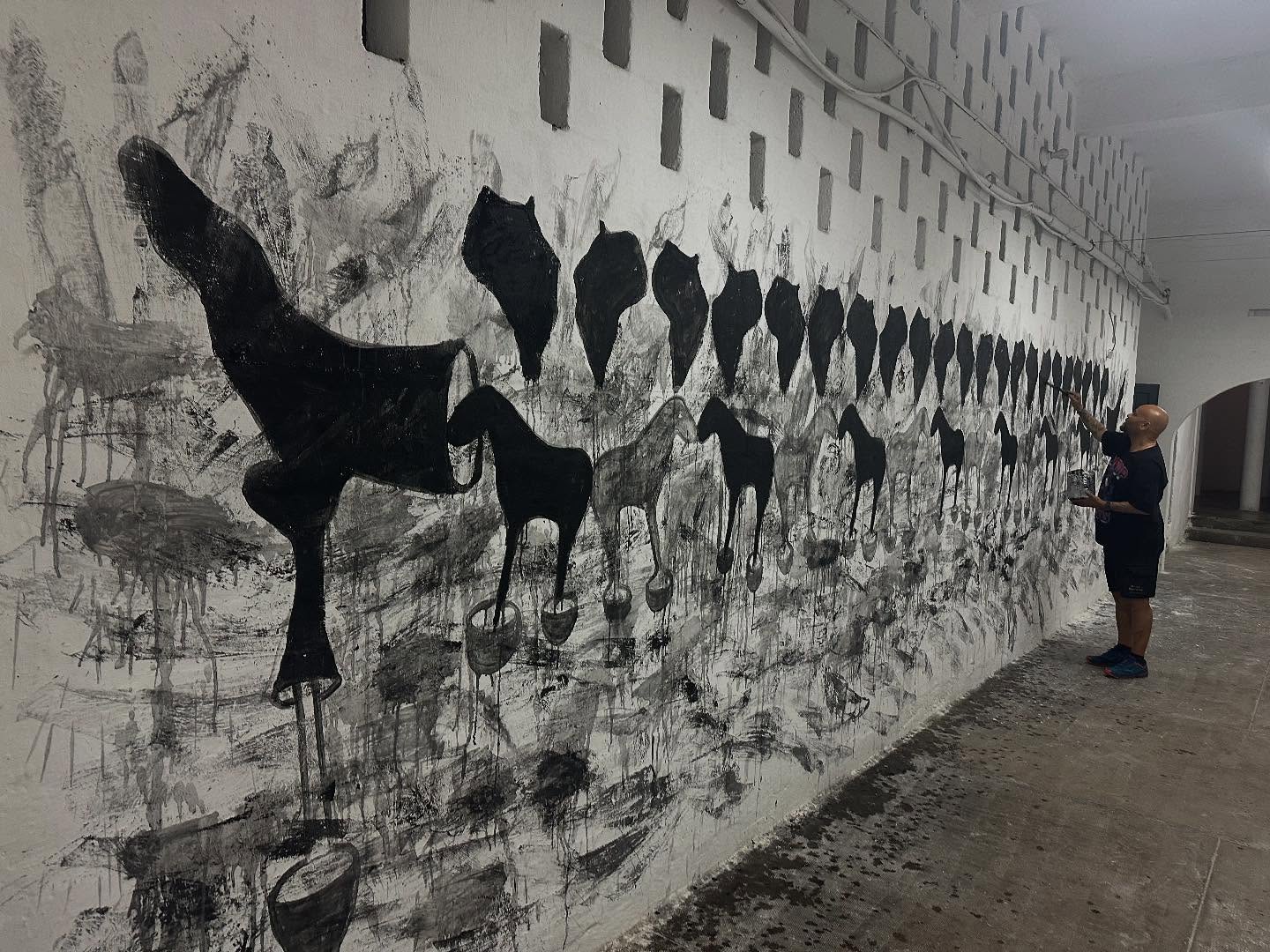
We tell elsewhere what happened in those rooms — the “Citadelle” exhibition, Ilias Selfati's mural. This report answers a rarer question: by what decision does a residential building open its basements. The answer holds in three words — a request, a vote, a contribution. None of the three makes a picture; the three together make a venue.
Sources: Le360, “Casablanca: un espace culturel dans les sous-sols de l’immeuble Assayag”, Qods Chabâa and Khadija Sebbar, 28 May 2023 (article and video report). The quotations are transcribed from the report and lightened of their hesitations, without change of meaning. The article's text spells “Pierre Pilven”; the video caption reads “Pielven” — we follow the text. The names of Rachid Andaloussi and Hafid El Awad, spoken in the report, are spelt as in L'Opinion, “Rétro-Verso: L’immeuble Assayag, là où le bon vieux temps est resté figé”, Houda Belabd, 7 May 2024, the article that also mentions Alexis Logier; the other people named aloud in the report are left unnamed here, as we could not verify the spelling of their names.

💬 Comments
No comments yet. Be the first!