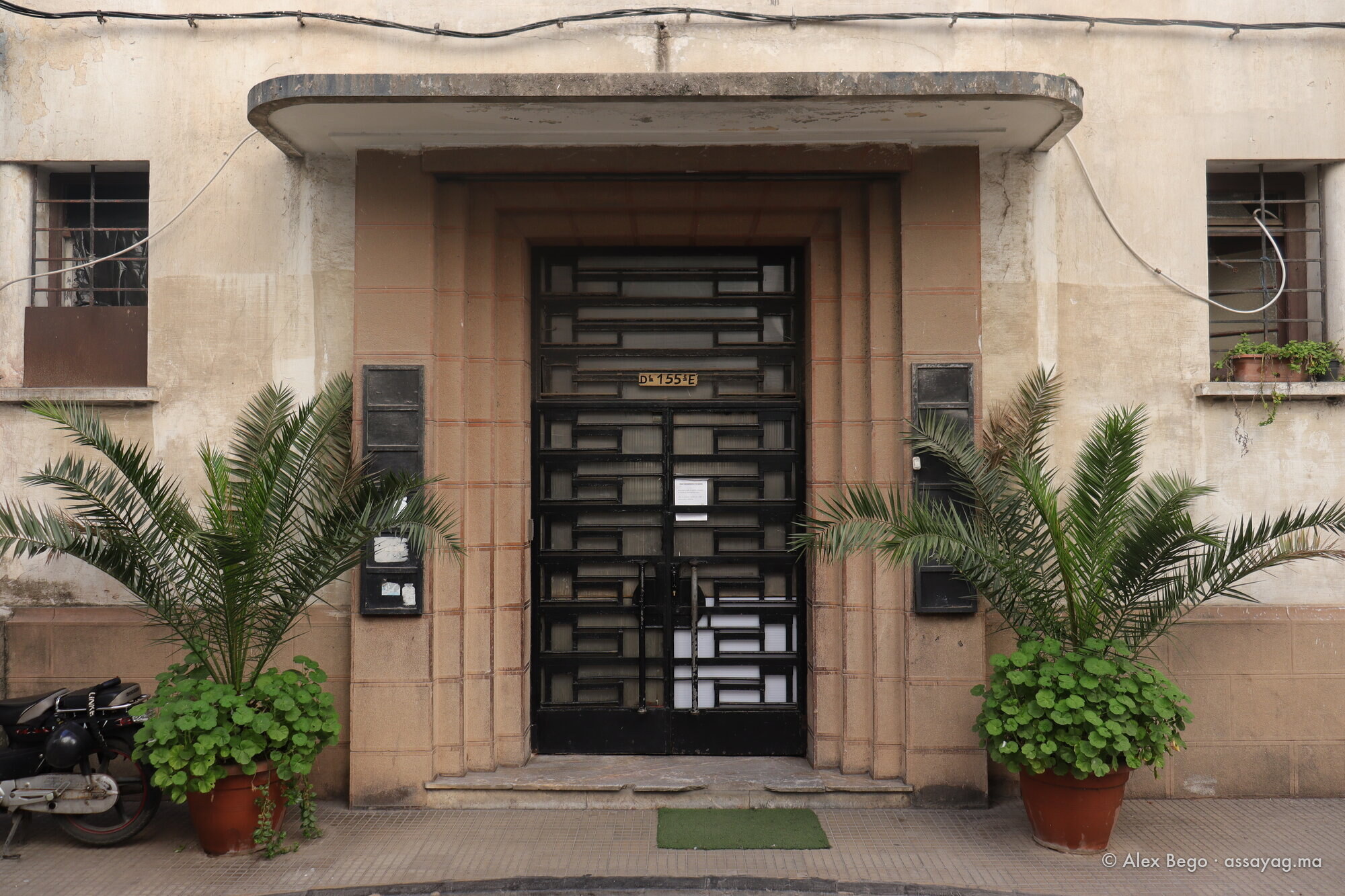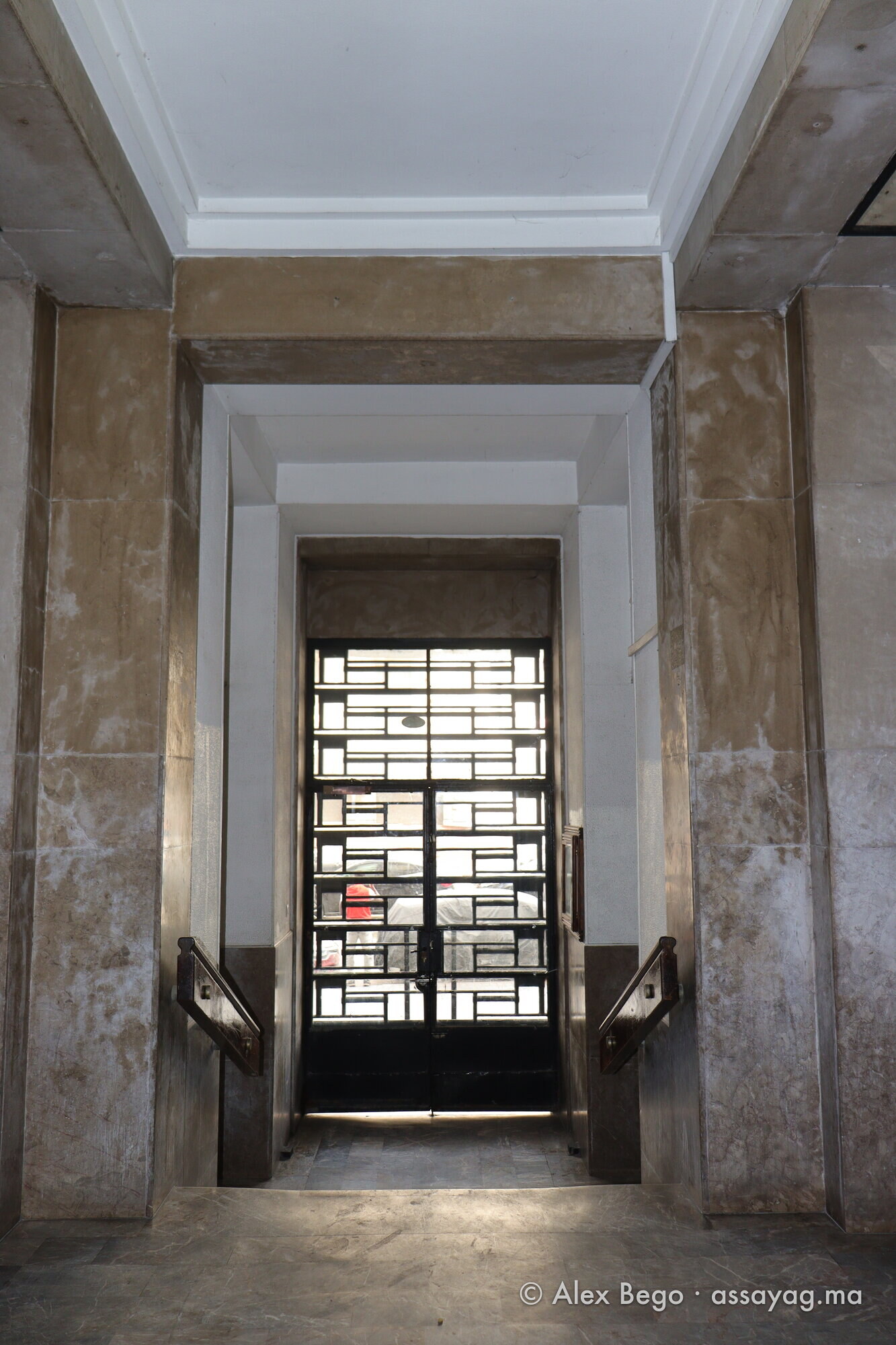
One enters the Assayag through a door with a geometric grille, between two pilasters faced with ochre tiles, under a canopy slab. Behind it, the vestibule keeps its large slabs of veined marble and its two handrails, on either side of the steps.
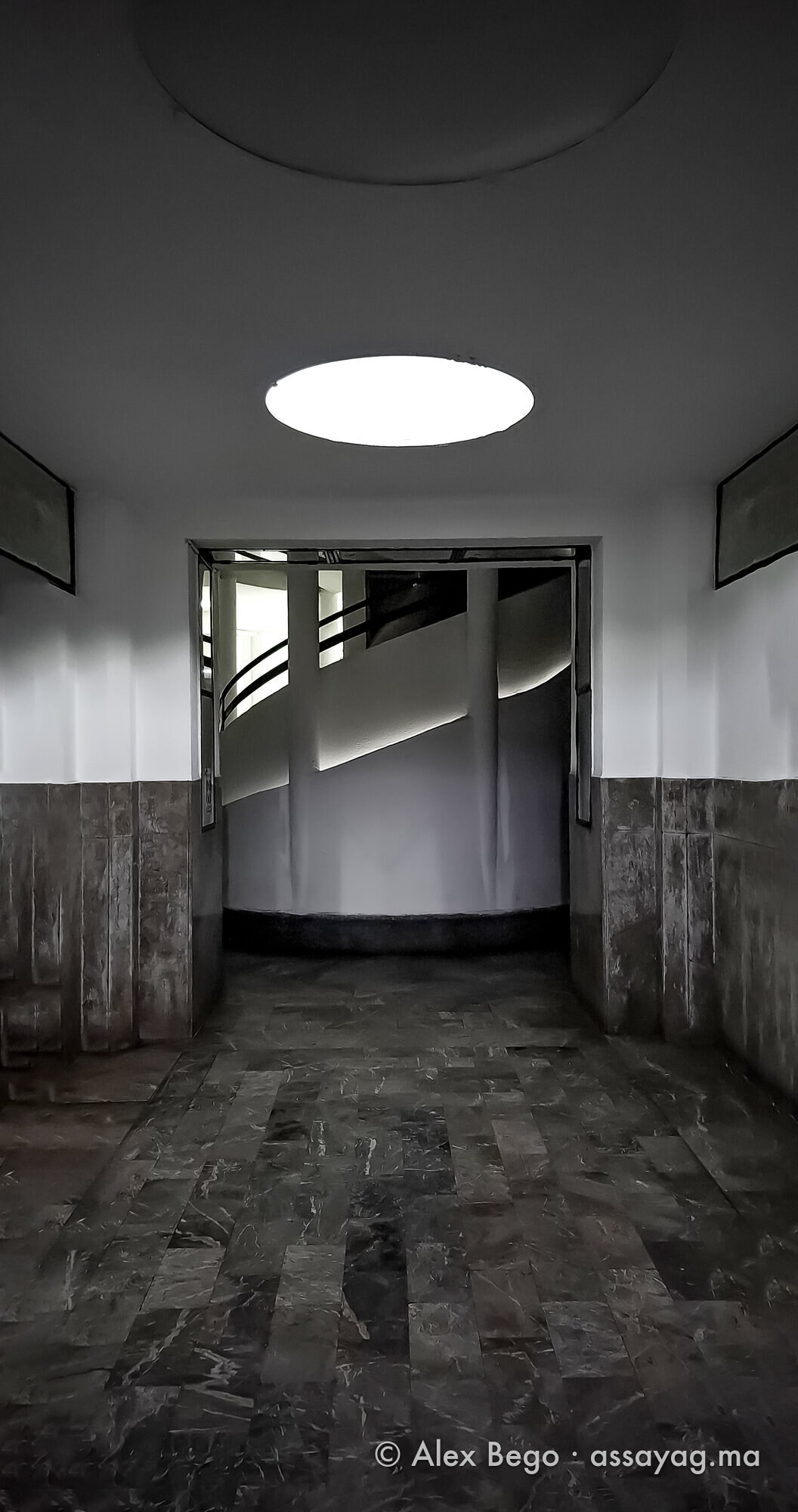
Further on, a corridor leads to the staircase. On the ceiling, a disc of light; on the floor, grey marble paving; on the walls, a brown marble dado running all the way to the hall. Through the opening at the end, the curve of the spiral staircase is already in view.
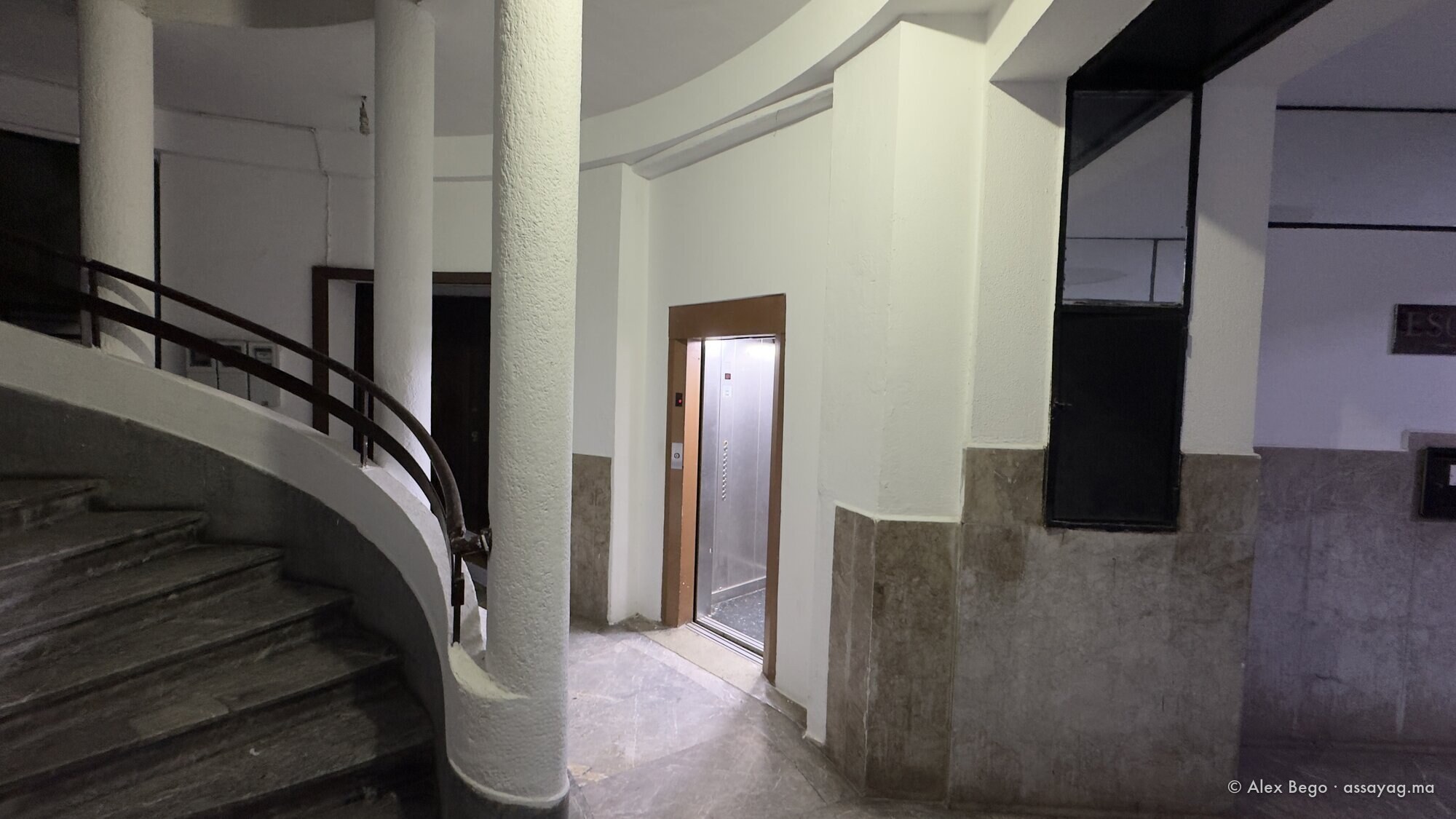
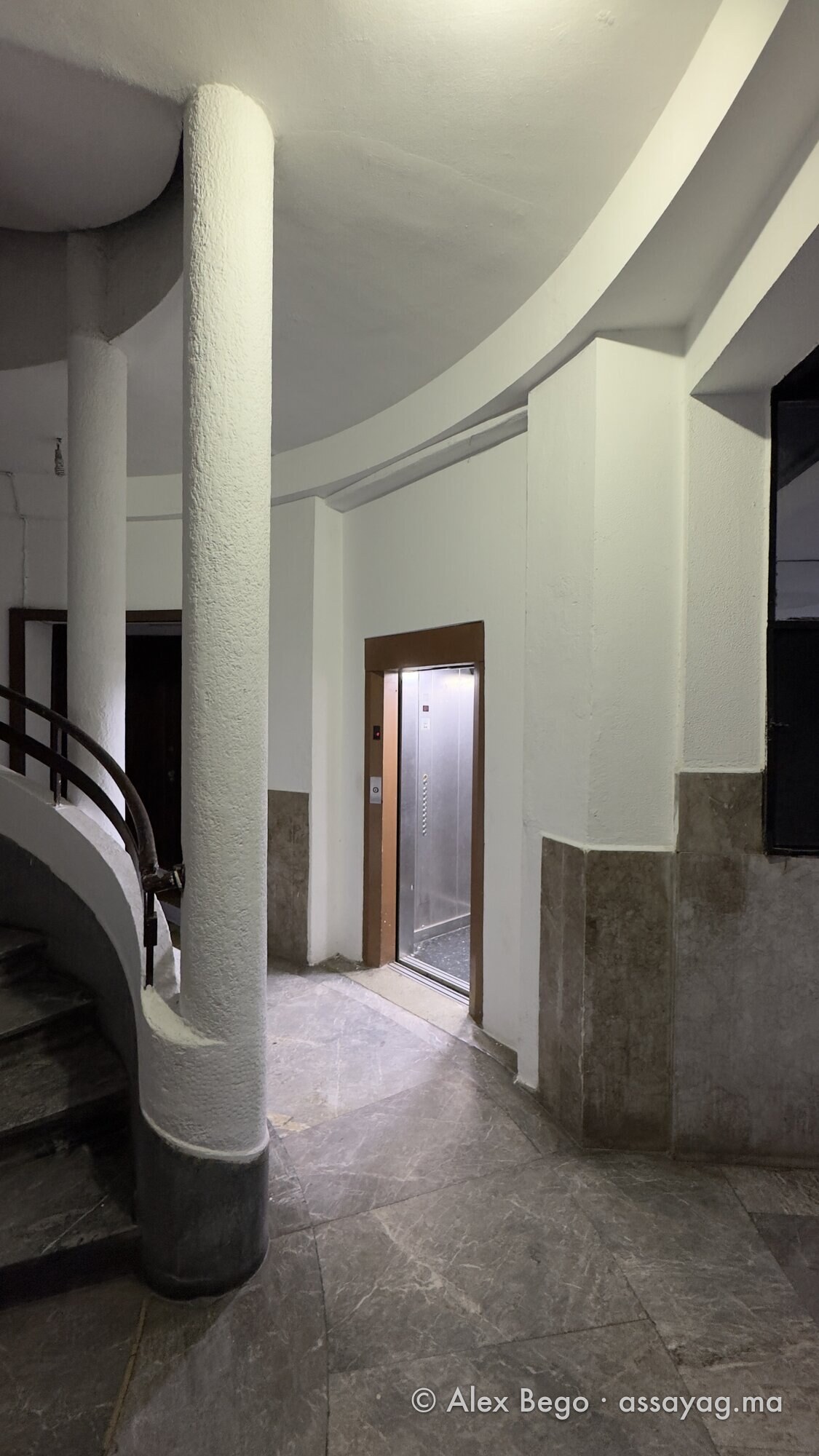
The hall is arranged around that staircase. Columns frame its flight, the handrail turns in a single line, and the lift door opens a few steps from the first treads.
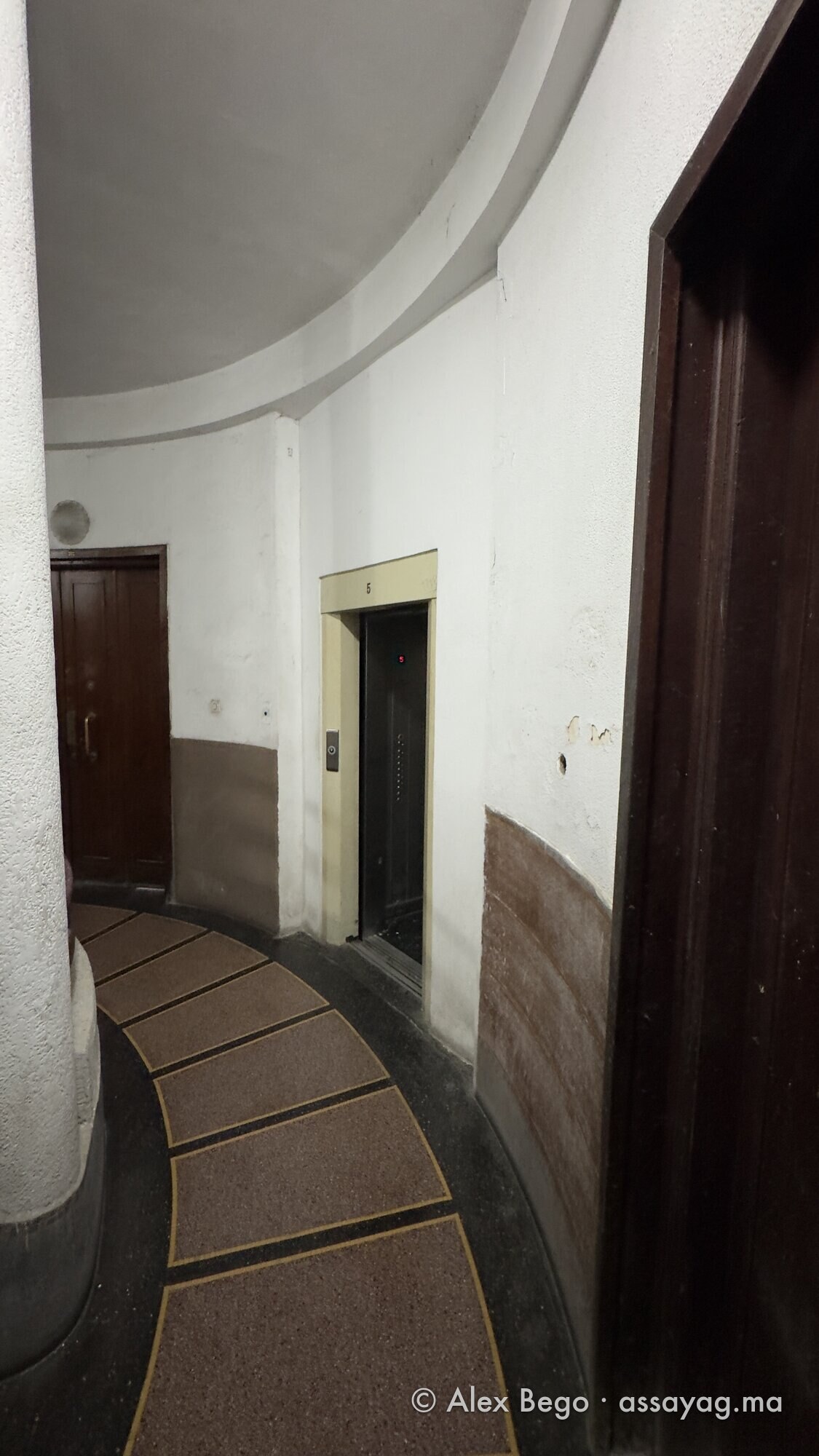
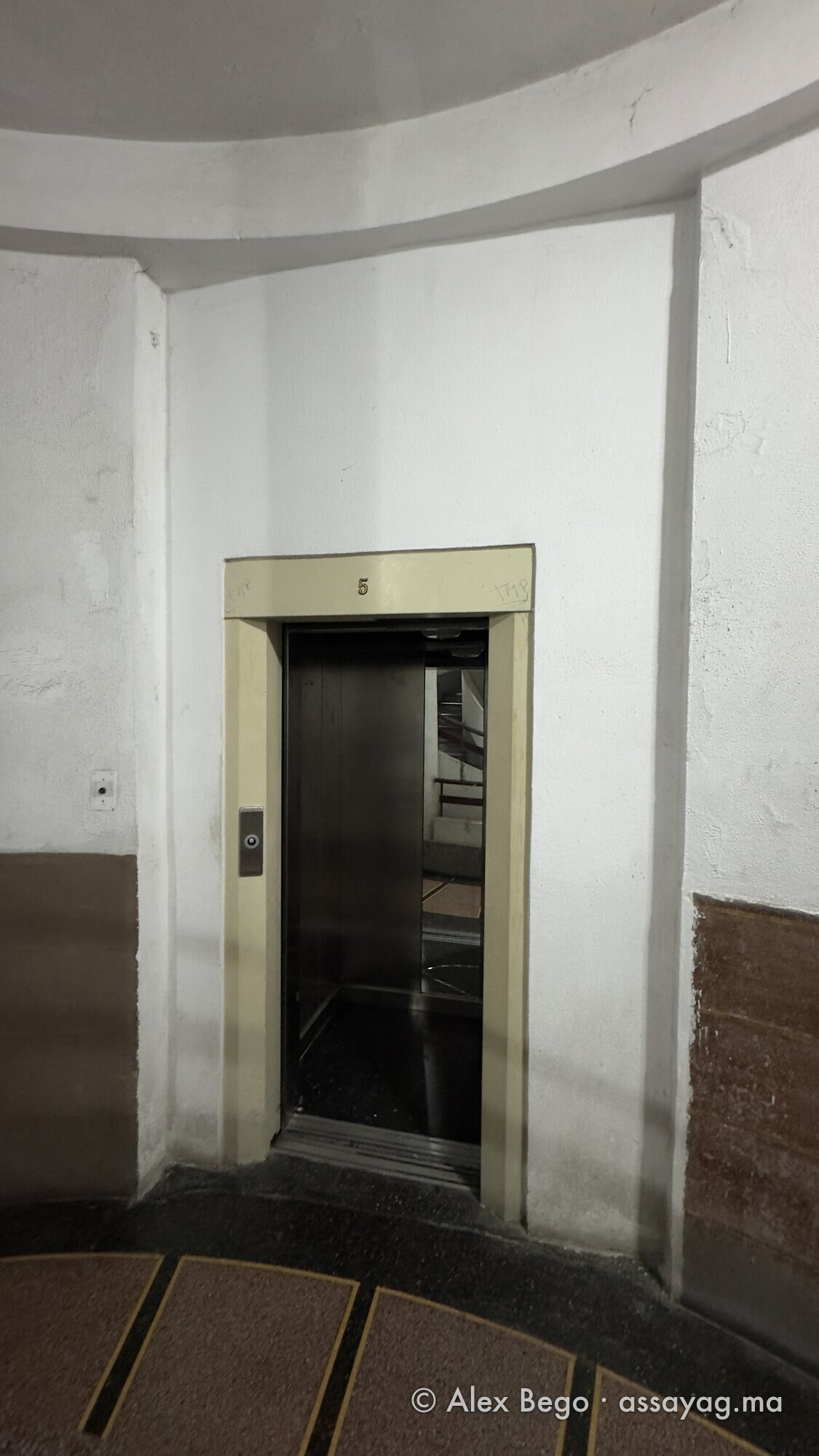
On the upper floors the same arrangement returns, more sober. On the fifth-floor landing, the terrazzo floor is cut into trapezoids by gilt metal joints that follow the curve of the wall, and the lift surround bears the floor number. The car itself is of today.
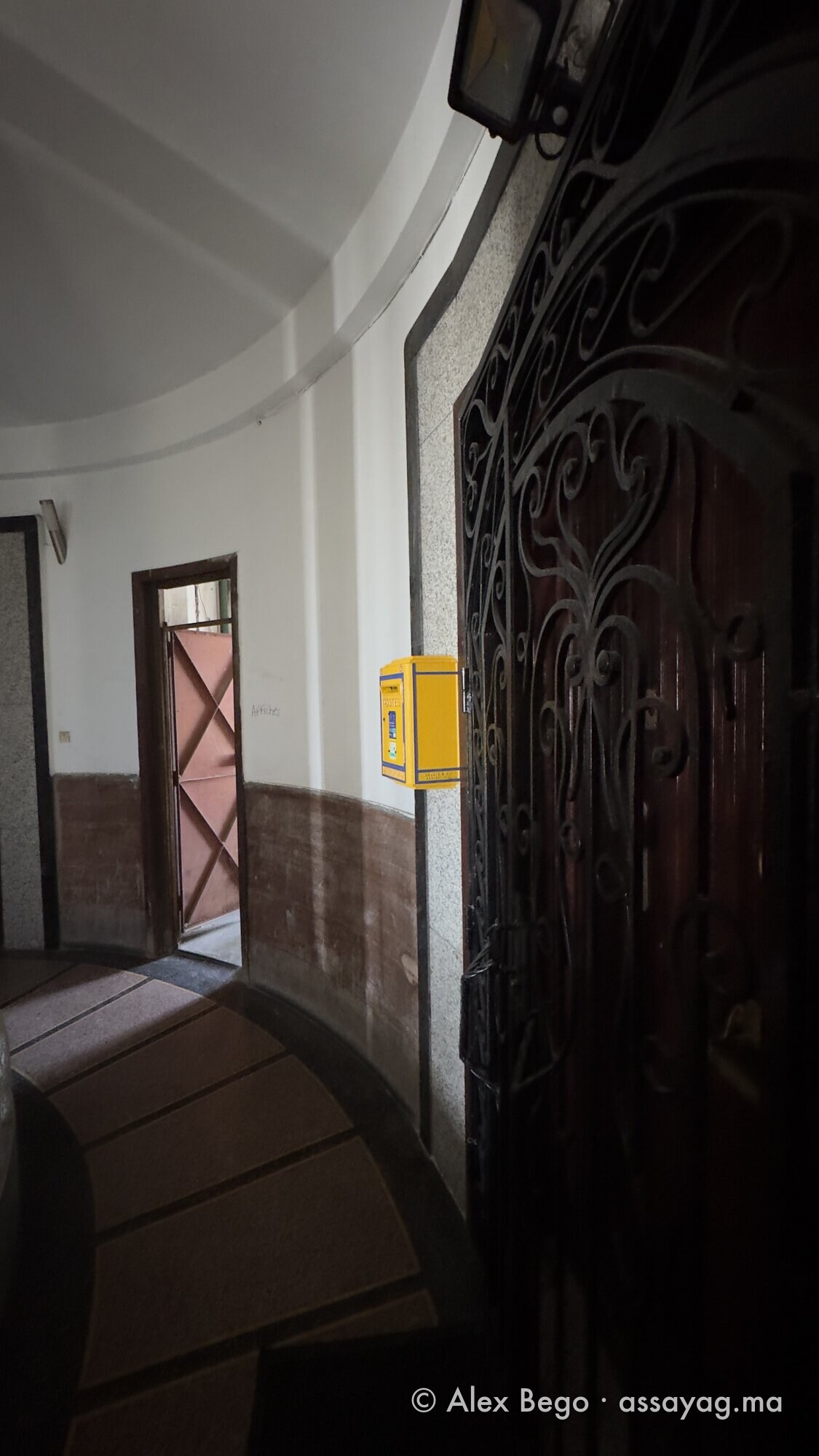
In another hall, a wrought-iron door with scrollwork over dark wood, and a yellow box marked “POSTES”, fixed against the granite jamb.
What is known about the original lifts is gathered in the Technical Dossier: their existence is attested from 1935; their number and machinery remain to be established. The staircase itself has its own album.
Photographs: Alex Bego.