
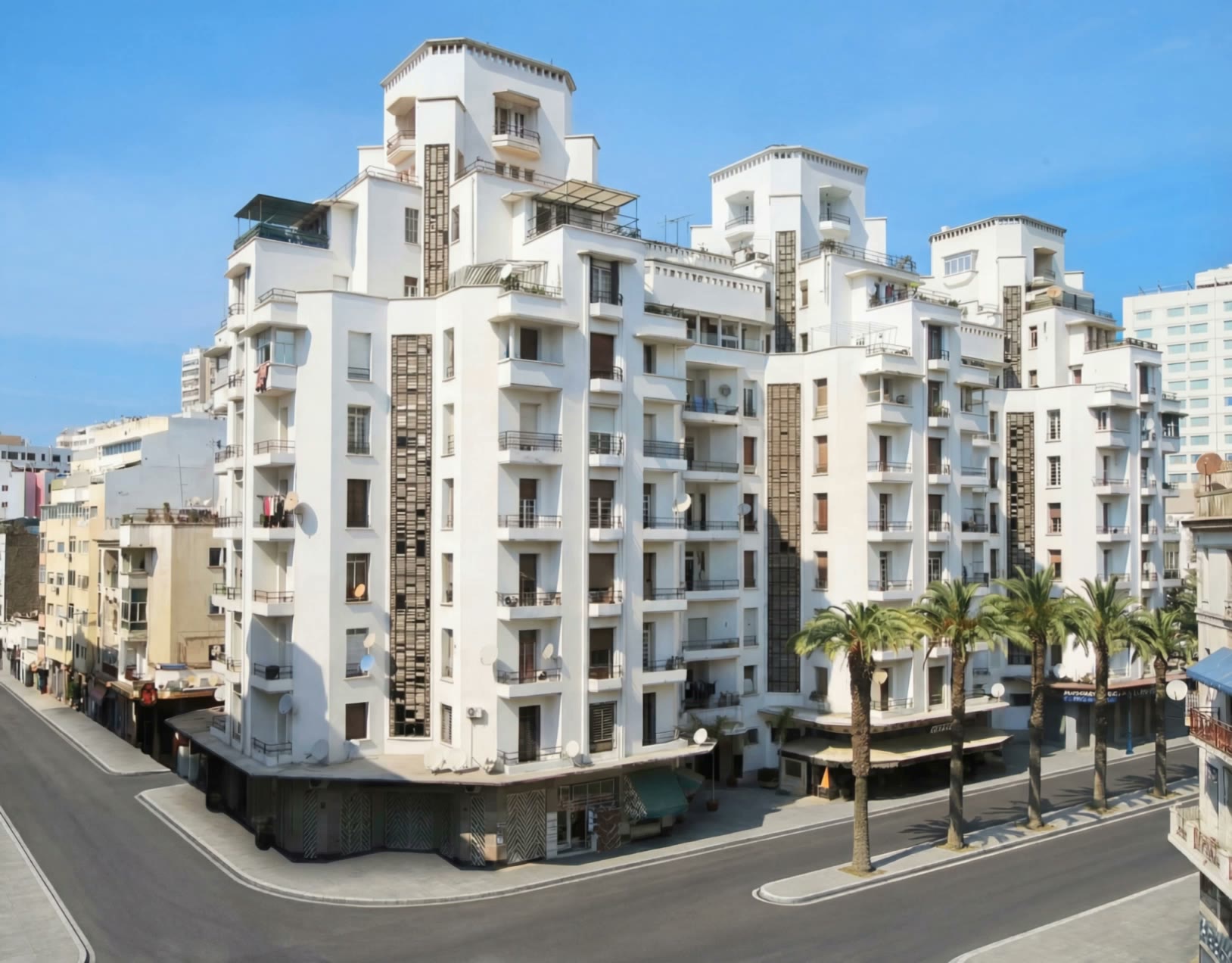
In Jean-Louis Cohen and Monique Eleb’s book, the address of the Assayag Building is written the old way: “avenue de la Marine, rues de l’Horloge et Léon l’Africain”. The rue de l’Horloge — Clock Street — is today’s rue Allal Ben Abdellah, where one of the two ramps of the underground garage still opens. A street older than the great boulevards, judged lame as early as 1915, along which some of Casablanca’s most remarkable buildings nevertheless rose within a decade or so.
A “lame street”
In 1915, in a text entitled “Une ville française moderne”, Maître Favrot protested that between the place de France, the heart of the city — today’s place des Nations Unies — and the railway station, nothing had been provided but “a lame, ill-conceived street, the rue de l’Horloge”. He called for an artery at least 25 metres wide, “the backbone of the commercial city”. It became the boulevard de la Gare, today’s boulevard Mohammed V, laid out through a pooling and redistribution of plots that Cohen and Eleb consider exemplary. Around the old street, the owners of the “Horloge district” formed a syndicate; their plans were approved in 1916.
A tower as a landmark
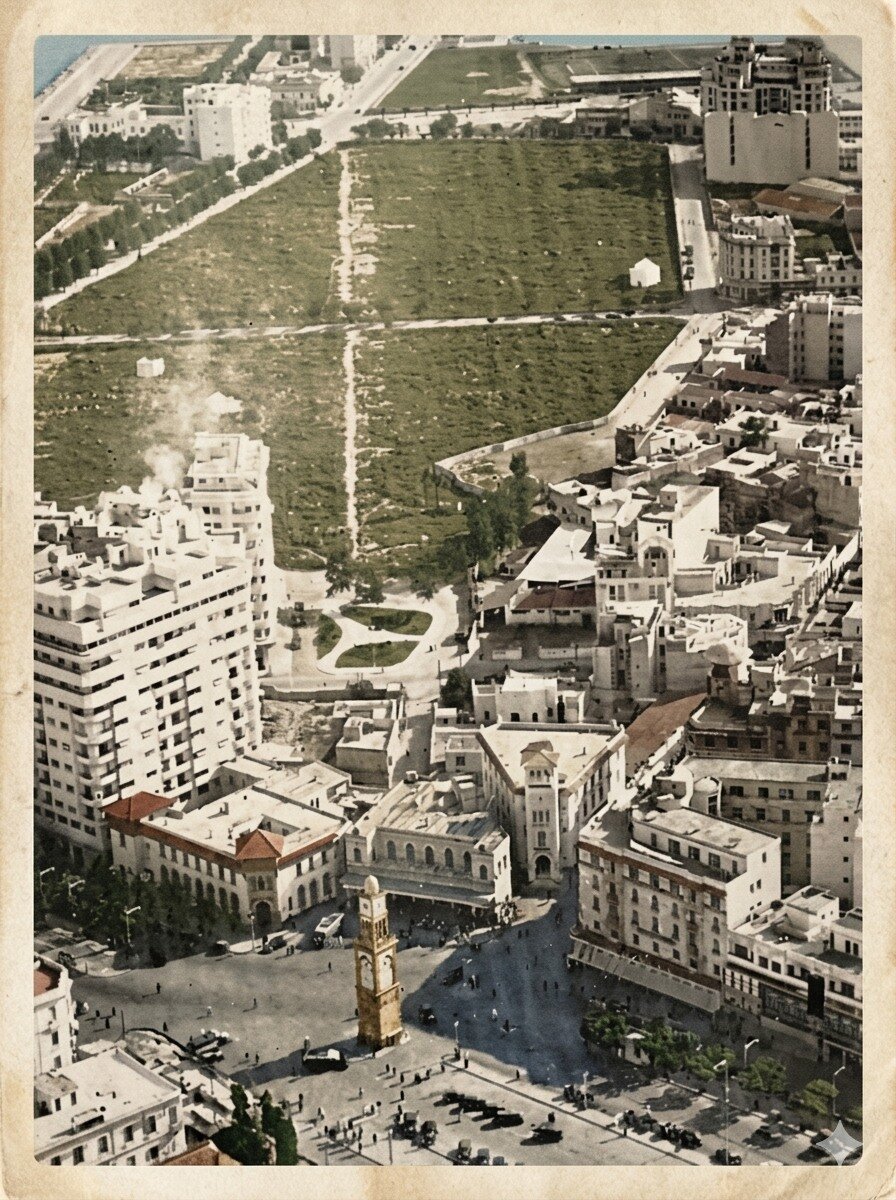
The street presumably takes its name from the clock tower on the place de France. For the two historians, this tower was the first sign of Casablanca’s entry into modern networks; it was joined by the El Hank lighthouse, crowned by Albert Laprade in 1916, then by the towers of the station (1928) and the city hall (1936), which would draw a triangle above the centre. Where the boulevard du IVe-Zouaves opens onto the square, the tower stands in the middle, with the Hôtel Excelsior on its left.
Cherubs and thistles
The street’s first buildings followed pre-1914 Parisian taste, Cohen and Eleb write. Some overflow with cherubs, baskets of fruit and sheaves of flowers, with lions’ heads alternating with shells; others prefer a more modern repertoire of thistles and creepers, punctuated by neoclassical pilasters and balusters.
1922: the Syndicat immobilier, at the corner of the boulevard
At the corner of the boulevard de la Gare and the rue de l’Horloge, Pierre Ancelle and the de Montarnal brothers built the building of the Syndicat immobilier de Casablanca in 1922: shops, a single residential floor, a courtyard for light. The corbelled façade, crowned with geometric zellige pediments and a small canopy of green tiles, takes up Moroccan themes, and the arcade respects the easement imposed on the boulevard. The building would for a time house the Galeries Lafayette. For the historians it belongs to the first, rather low layer of the new town, and illustrates the spread of the corner building, a “monument of domestic architecture”.
1928: the Glaoui building and its arcade
Between the boulevard de la Gare, the rue Nolly and the rue de l’Horloge, Marius Boyer, “the city’s most prolific and most original architect”, raised with Balois the building of the Glaoui, pasha of Marrakech — in 1928 according to Cohen and Eleb. Turrets house the two-level living rooms of the fifth-floor flats, a composition that would for a time become Boyer’s signature. Loggias, columns, zelliges and geometric sculpture make it “an astonishing inhabited monument”. At the heart of the block opens the first of the city’s shopping arcades inside a building: roofed with glass blocks, punctuated by rotundas, with galleries lit by prismatic lamps.
1929: the domes of Lévy et Charbon
On the axis of the rue de l’Horloge, Ignacio Sansone and Paul Busuttil built the Lévy et Charbon block in 1929, also known as Charbon et Lévy. Its domes of brown and blue zellige mark the corners of a square. For Cohen and Eleb, they express the defiance of the height restrictions long imposed on Jews under dhimmi status — a story we tell in “From the mellah to the towers”. Observers at the time saw in it a reminder of the large buildings of the new districts of western Paris, copied by South Americans. Behind this luxury, however, the flats had only two or three rooms, and the dining rooms, sometimes set in the bow-windowed turrets, served as drawing rooms.
At the corner, the Assayag
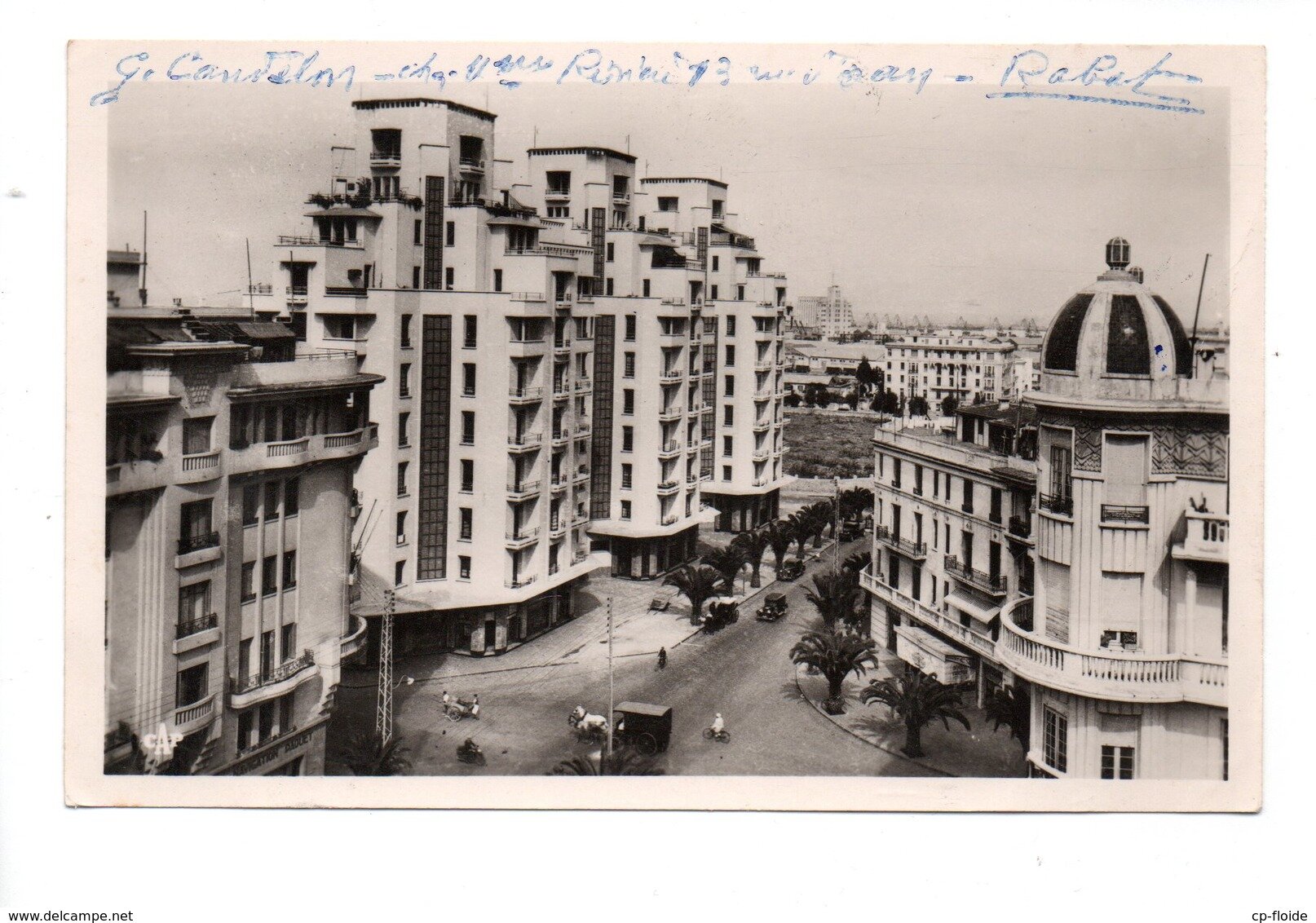
The Assayag rose between 1930 and 1932 at the corner of the avenue de la Marine and the rue de l’Horloge. A postcard from around 1932, published by Cohen and Eleb, shows that corner: on the left the Assayag, on the right the Lévy et Charbon building; the duplexes of the crown look out over the port and the zellige domes nearby. The Photo Flandrin cards, for their part, are captioned “Angle de la rue de l’Horloge et avenue Poeymirau”: several are gathered in the album of old postcards.
The street today
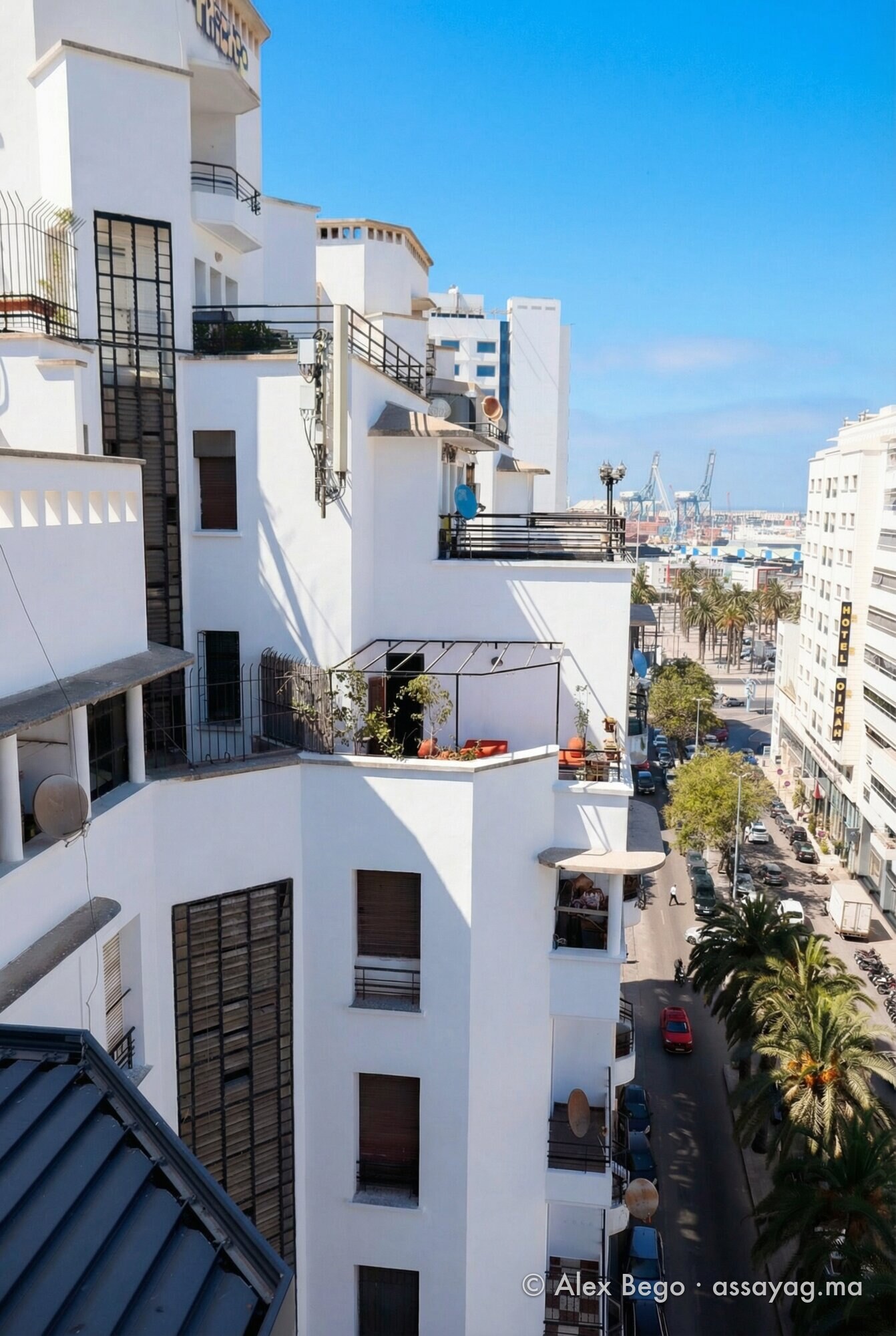
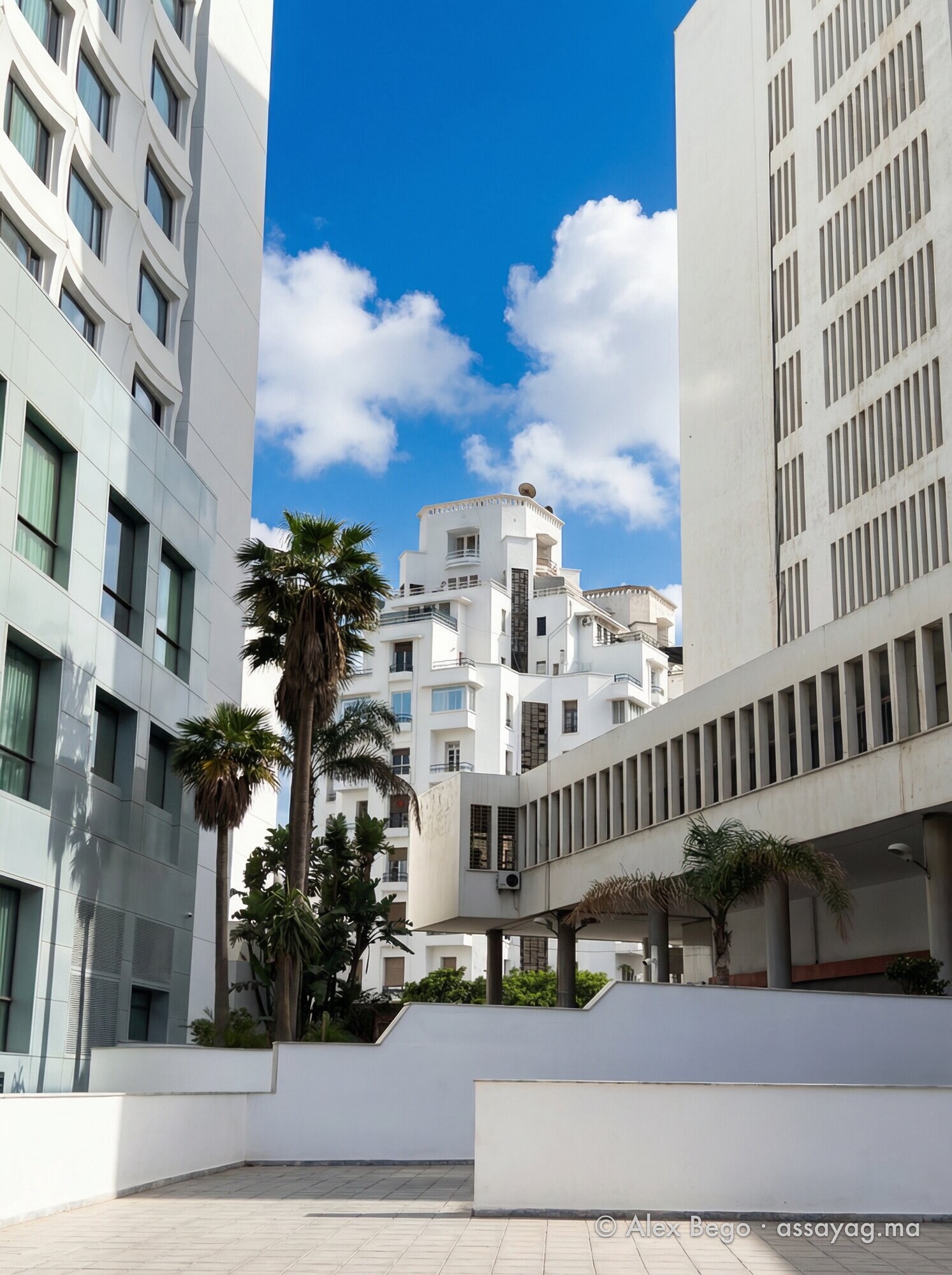
Now rue Allal Ben Abdellah, the former rue de l’Horloge still runs along the back of the Central Market, whose main façade faces the boulevard Mohammed V. Along it stood, one after another, the corner building of 1922, the Glaoui of 1928, the domes of 1929 and the towers of the Assayag: ten years of Casablanca architecture, from Parisian ornament to modern setbacks, along a street once thought too modest to be an artery.
Frequently asked questions
What is the rue de l’Horloge in Casablanca called today?
Rue Allal Ben Abdellah. It runs along the back of the Central Market, whose main façade faces the boulevard Mohammed V, the former boulevard de la Gare.
Why was the boulevard de la Gare cut through?
Because between the place de France and the station there was only the rue de l’Horloge, judged in 1915 “lame and ill-conceived”; Maître Favrot called for an artery at least 25 metres wide.
Which notable buildings lined the rue de l’Horloge?
The Syndicat immobilier building (Ancelle and the de Montarnal brothers, 1922), the Glaoui building (Boyer and Balois, 1928), the Lévy et Charbon block (Sansone and Busuttil, 1929) and the Assayag Building (Boyer, 1930–1932).
Where is the Assayag Building in relation to the rue de l’Horloge?
At the corner of the former rue de l’Horloge and the former avenue de la Marine, today rue Allal Ben Abdellah and boulevard Hassan Seghir.
Sources: Jean-Louis Cohen and Monique Eleb, Casablanca. Mythes et figures d’une aventure urbaine, Hazan, pp. 103–109 and chapters “Habiter la ville nouvelle : les années 1920” and “Des arts décoratifs à la modernité”; the authors cite in particular Me C. Favrot, “Une ville française moderne”. Present-day street names: Wikipédia, “Marché central de Casablanca”. Old postcards gathered online (Photo Flandrin and other publishers), reproductions published on delcampe.net. Translations from the French are ours.
💬 Comments
No comments yet. Be the first!