
“Casablanca is a city of bachelors.” The observation was made in 1932 by the journal Chantiers nord-africains: society there was still in its infancy, families remained rare outside Moroccan circles, and the city was filling up with businessmen who had come alone “to test the ground”. They had to be housed. At the top of the Assayag Building, Marius Boyer had set aside terraced garçonnières for them; three years later he built them a whole building, Les Studios. In between, Casablanca invented a new kind of home.
A city of men on their own
The influx of immigrants long made housing single people a pressing question, Jean-Louis Cohen and Monique Eleb note. For newly arrived Moroccan peasants the answer was harsh: villages of nouallas (huts), derb Ghallef, Bidonville, before more settled housing. For Europeans who had come alone to try their luck in Morocco, it was at first a matter of chance.
The room at the end of the corridor
Until the end of the 1920s, flats for single people were born of circumstance: a leftover strip of plot to make pay, a room detached from a flat to be let. The ordinary lot of a young man was a furnished room “sublet with difficulty, without its own washroom, without its own entrance”, at the far end of a flat where a family with noisy children lived.
Tenants, for their part, hunted for space. As early as 1919, on the building permit for Boyer’s Guedj building, the health service specified that the storerooms on the roof, which had neither the minimum floor area of eight square metres nor doors, could on no account be used as living rooms: more than one tenant must have been tempted to put a servant or a subtenant there. In 1928 Robert Lièvre combined in a single development, between rue Reitzer, rue du Lieutenant-Bergé and rue Chapon, the maid’s room, the studio or garçonnière and the five-room flat — a cross-section, the historians say, of Casablanca society.
At the top of the Assayag
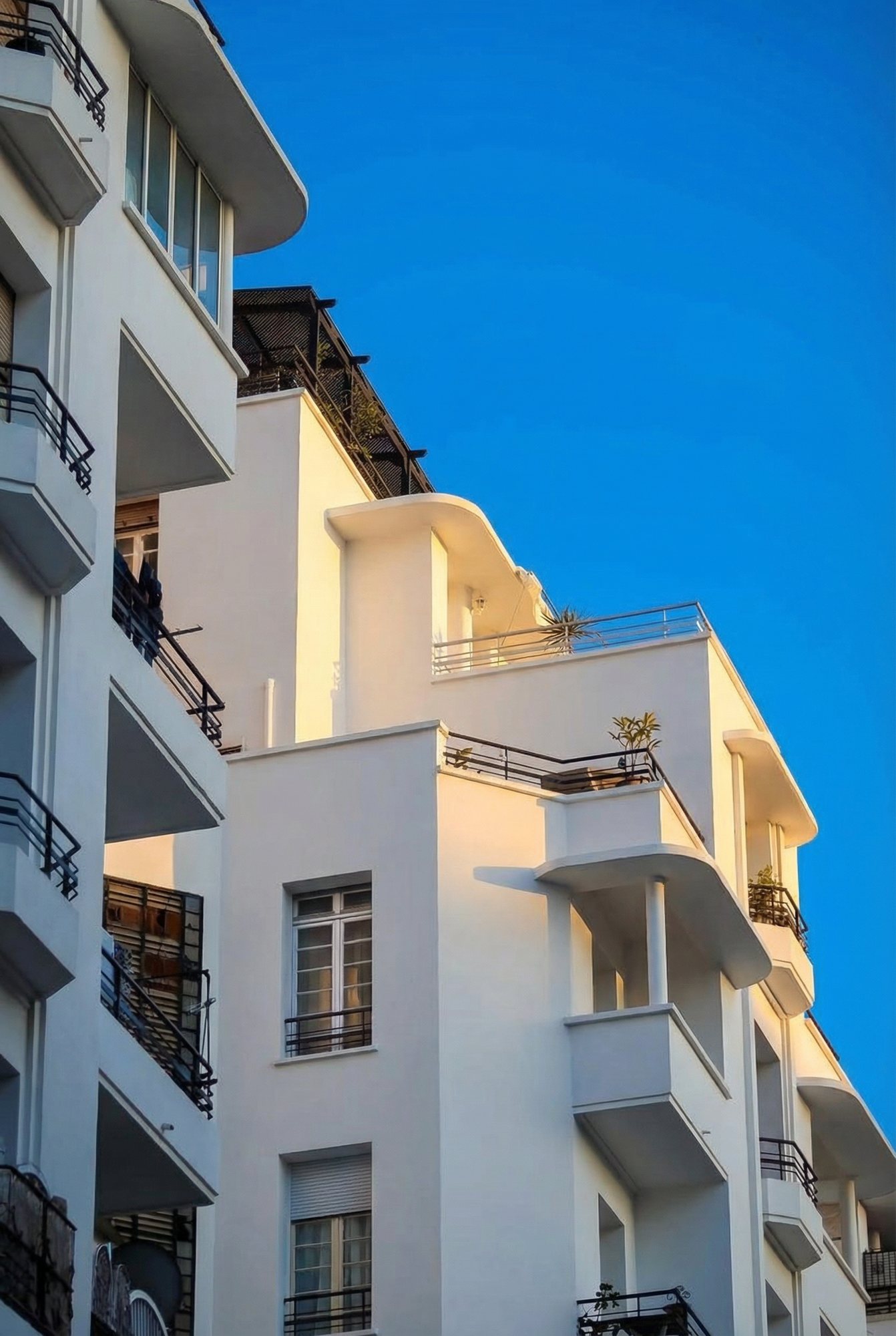
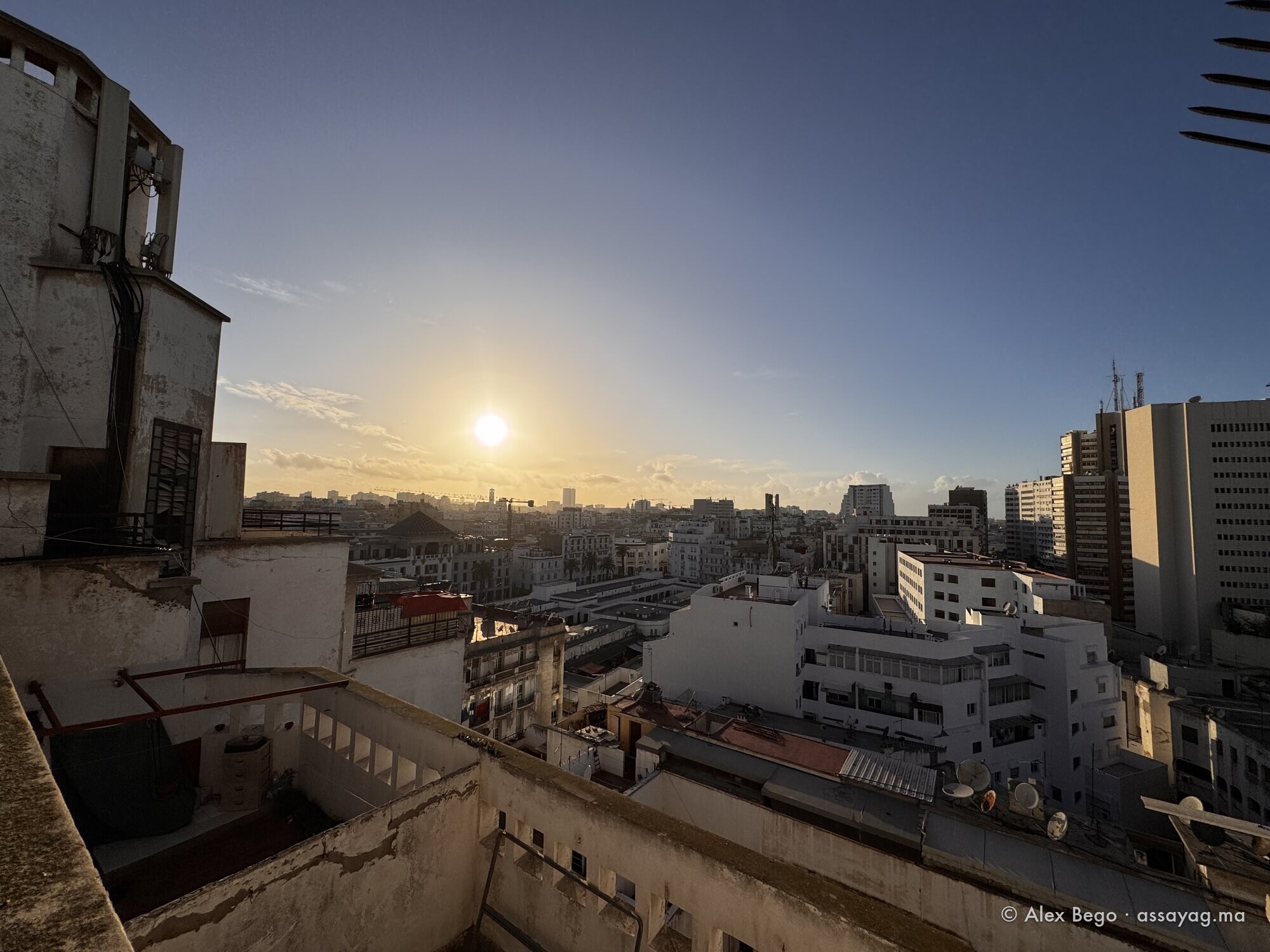
At the Assayag, built between 1930 and 1932, the garçonnières are no leftover of the plan. Boyer placed them on the eighth floor, together with the laundries and the maids’ rooms, beneath the three duplexes of the crown. They open onto broad terraces: for Cohen and Eleb, the Assayag remains the most spectacular of the city’s terraced buildings. A 1993 photograph they publish is captioned “the villas and the terraced garçonnières”.
The two historians see in it proof that Boyer was thinking about housing single people well before Les Studios. The word, moreover, had two meanings: a single man’s home, but also a more discreet pied-à-terre, as we explain in connection with the level that ties everything together. Two garçonnières still occupy that level of the building today. One floor down, at the first setback of the seventh floor, are four studios in which the bedroom opens onto the sitting room.
The tall buildings of those years went the same way. The one Henri Couette built for the contractor Banchi, at the corner of boulevard Foch and rue de Pont-à-Mousson, for a while the tallest in the city, combined garçonnières and “two-room” flats, with set-back dwellings on terraces on the eighth floor.
Rue Mouret, 1932: twenty-eight garçonnières
In the 1930s, housing for single people became a building type in its own right, sometimes a prestigious one. In 1932 Robert Lièvre built on rue Mouret a building of twenty-eight garçonnières. The press hailed the boldness: no one had yet thought of putting up a building solely for them, and it took a precise knowledge of the needs of a “civilised” bachelor and man of taste.
Each dwelling was designed for receiving. An entrance hall preceded the main room and guarded privacy; the bed withdrew into an alcove near the bathroom, the toilet and the kitchen units, so that the room kept the air of a sitting room at any hour. Lièvre owned the building. But such comfort remained the exception: in a city where the housing crisis was endemic, most single people depended on the vagaries of the market, and the poorest went on living in sublets.
Les Studios, 1935: “four storeys make eight”
In 1935 Marius Boyer built Les Studios, which he owned himself; the name of the building is inscribed above the entrance. The flats are duplexes, and the façade says so: windows and loggias are grouped in fours under a single sunscreen, so that its “four storeys make eight”. Boyer reused the façade-lit staircase of his Lévy-Bendayan building and imported a type known in Paris but new to Casablanca.
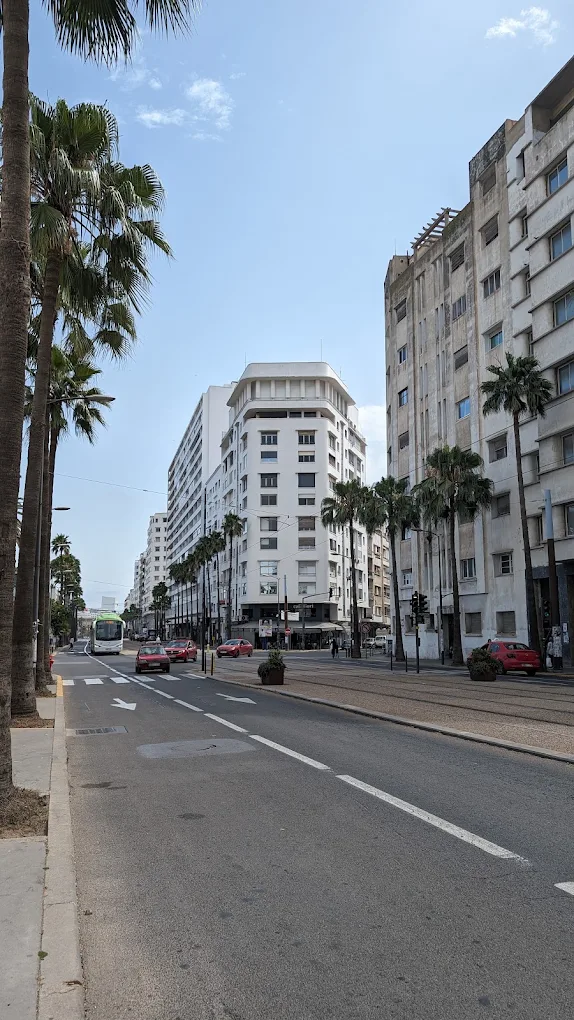
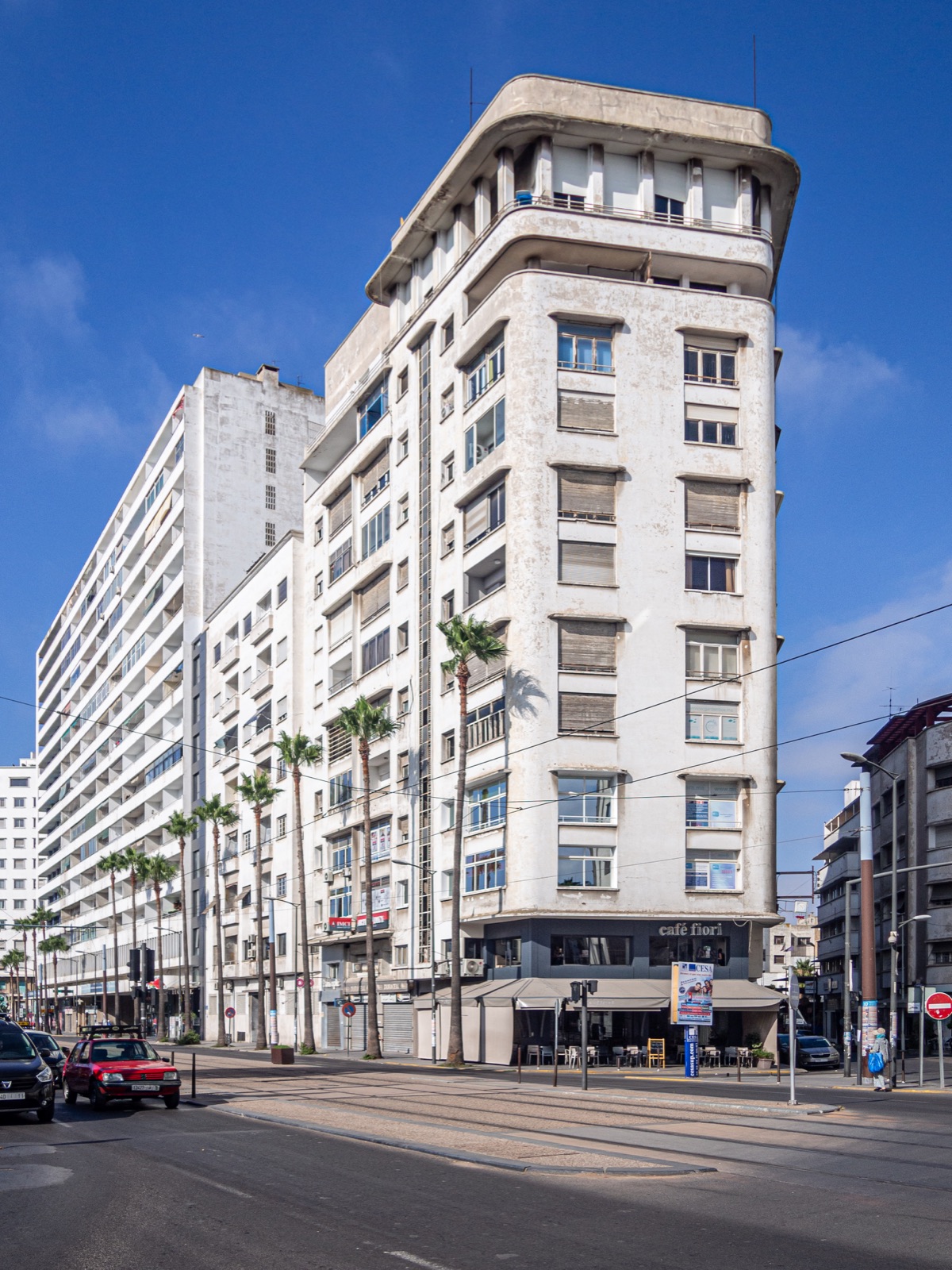
At the centre, a wide staircase with a lift, alongside the service stair leading to a linen room; two further staircases served the wings and the kitchens — an unmistakable sign of luxury. Below, an entrance lobby, the kitchen, the dining room and sometimes a linen room. Above, the bedroom with its bathroom, a WC and a gallery overlooking the void of the dining room. The four-room studios had no more bedrooms — no children were expected — but a smoking room next to the dining room and a boudoir. Central heating, refuse chutes and, a novelty, a pay telephone on the mezzanine completed the comfort.
The top floor for single people
Alongside these specialised buildings, the habit spread of reserving the top floor of ordinary buildings for studios, or even for garçonnières. In 1934 Sansone and Busuttil built the Eyraud building on boulevard de Marseille: five levels of large flats and, above them, a floor of garçonnières. The constant arrival of newcomers kept demand alive, and every period would produce its own version.
Frequently asked questions
What was a garçonnière in 1930s Casablanca?
A small self-contained home for a man living alone: an entrance, a main room serving as a sitting room, a bed in an alcove, a bathroom and kitchen units. They were found on the upper floors of buildings, as on the eighth floor of the Assayag, or filling whole buildings, like Robert Lièvre’s on rue Mouret (1932).
Why was Casablanca called a “city of bachelors”?
Because the city drew many men who came alone to try their luck; in 1932 the journal Chantiers nord-africains observed that families there remained relatively rare outside Moroccan circles.
What are Marius Boyer’s Les Studios?
A 1935 building owned by Boyer, made up of duplex flats for single people and childless couples: a double-height dining room, a gallery, a bedroom upstairs, a smoking room and a boudoir, central heating and a pay telephone.
Did the Assayag Building have garçonnières?
Yes. On the eighth floor, together with the laundries and the maids’ rooms, Boyer provided garçonnières opening onto broad terraces; two still occupy that level today.
Sources: Jean-Louis Cohen and Monique Eleb, Casablanca. Mythes et figures d’une aventure urbaine, Hazan, p. 88 and chapters “Habiter la ville nouvelle : les années 1920” and “Des arts décoratifs à la modernité”; the authors cite in particular Chantiers nord-africains (1932) and Marius Boyer’s album Casablanca, travaux d’architecture (1933). Translations from the French are ours.

💬 Comments
No comments yet. Be the first!