
Casablanca is readily taken for an old city. It is above all a city begun again — and its history fits into three names.
Anfa, the vanished city
Arab historians and geographers call it Anfa; European maps make it Anafa, Anafe, Anif or Nafe. Known as a town between the thirteenth and fourteenth centuries, it exported wheat — Portuguese sources speak of “Anafil wheat” — and a fine wool prized by Genoese merchants.
It also harboured corsairs. That would be its undoing: in 1468 the Portuguese, better armed, destroyed the town. So completely that in the sixteenth century Leo Africanus could no longer imagine any hope of rebirth. A modern historian points out, however, that the very doggedness with which the sources repeat these destructions proves, by implication, that the town mattered: one does not persist in destroying a place of no importance.
Three centuries of silence
There followed nearly three hundred years of effacement. The town was no more than a landmark on the coast, a port of call for ships. The French consul at Salé, father of the poet André Chénier, saw there “Anafé, which is today called Dar el-Beïda”, inhabited by a few families living in huts.
For a city, three centuries of sleep are usually a sentence without appeal. That is what makes what came next remarkable.
Dar el-Beïda: a city willed into being
Everything changed at the end of the eighteenth century. In 1769 the sultan Sidi Mohammed ben Abdallah retook Mazagan from the Portuguese, then decided to rebuild the old fortress of Anfa in order to complete the Atlantic defences between Rabat and Mogador.
He brought in Genoese masters. A wall of more than four kilometres, flanked by bastions at the corners, enclosed the ground intended to become a town — a building site that would remain open for close on a century. To people it, the sultan settled garrisons there along with populations from the Souss and the Mogador region, and endowed it with everything that makes a town: a mosque, a medersa, a hammam, ovens and mills.
One has to take the measure of the gesture: this town did not grow up of its own accord over the centuries. It was willed, planned and peopled by political decision.
1784: the opening to trade
The sultan did not stop there. The Danish consul reports that in 1784 the sovereign conceived the plan of a new trading town near Dar el-Beïda: he announced favourable terms for the first European ships to come, lowered customs duties and signed treaties with Spain, Austria and the United States of America.
The results were not long in coming: one year of his reign would see more than two hundred and fifty laden ships enter the port. The granaries of Mers-Sultan made it possible to store wheat in the good years and redistribute it in the bad — a food-security policy in a country where irregular rainfall made the population vulnerable to grain crises.
The retreat, then the reopening
After the death of Sidi Mohammed ben Abdallah, political unrest and food crises all but cancelled the momentum. In 1814 Moulay Slimane banned the export of wheat, oil and hides, and struck imports with prohibitive duties. In the first half of the nineteenth century, foreign observers saw no more there than a secondary port.
Not until 1836 did Casablanca appear in the consular statistics. European demand for wool then revived business: in February 1856, thirty-six ships lay at anchor in the roadstead. In the same year, the treaty with Great Britain abolished the sultan's monopolies and brought Morocco lastingly back into international trade.
The city the Assayag found
From five hundred inhabitants around 1850, the population rose to a thousand in 1857, nine thousand in 1885, twenty-one thousand in 1900, twenty-five thousand in 1907. Then the explosion of the twentieth century would do the rest.
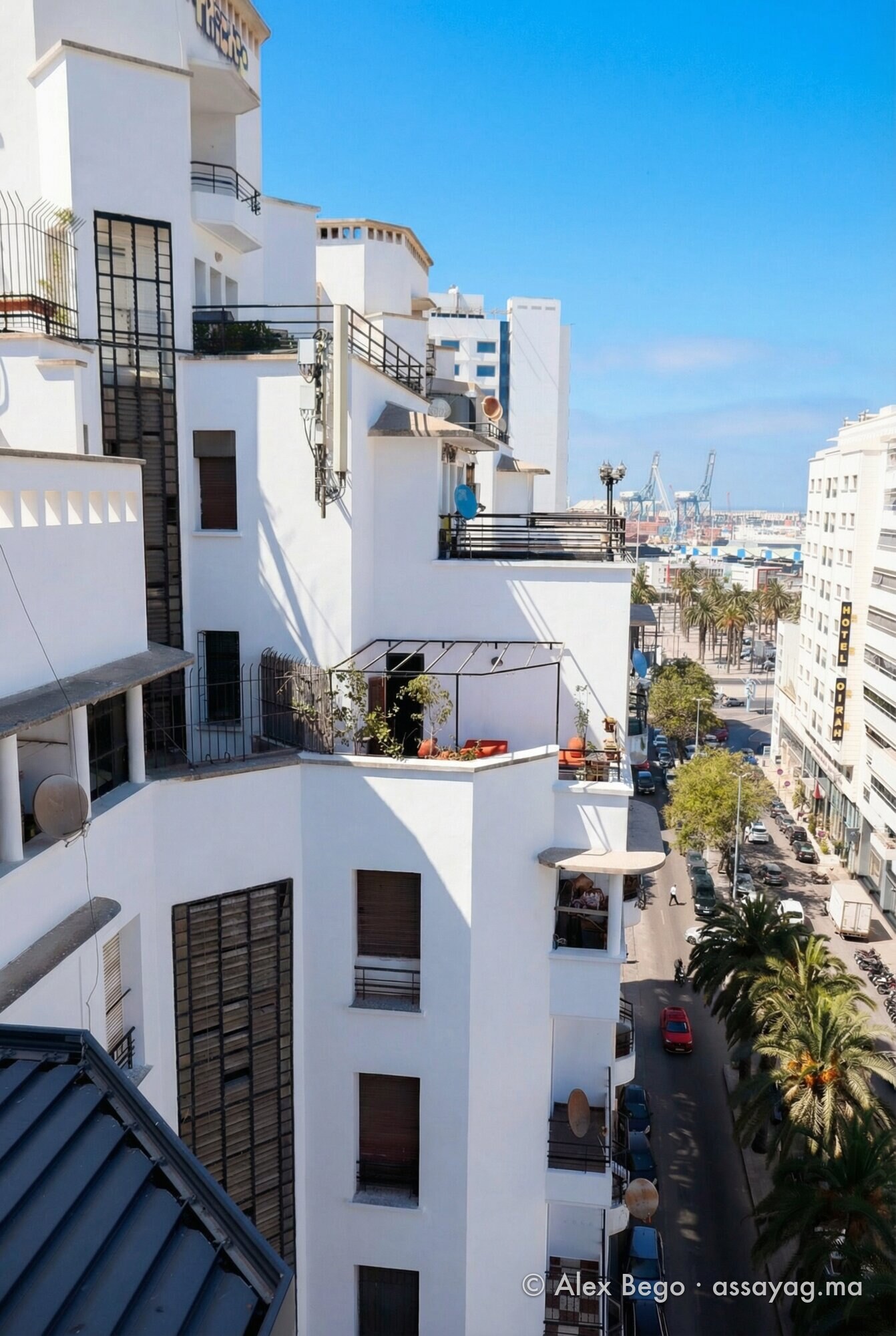
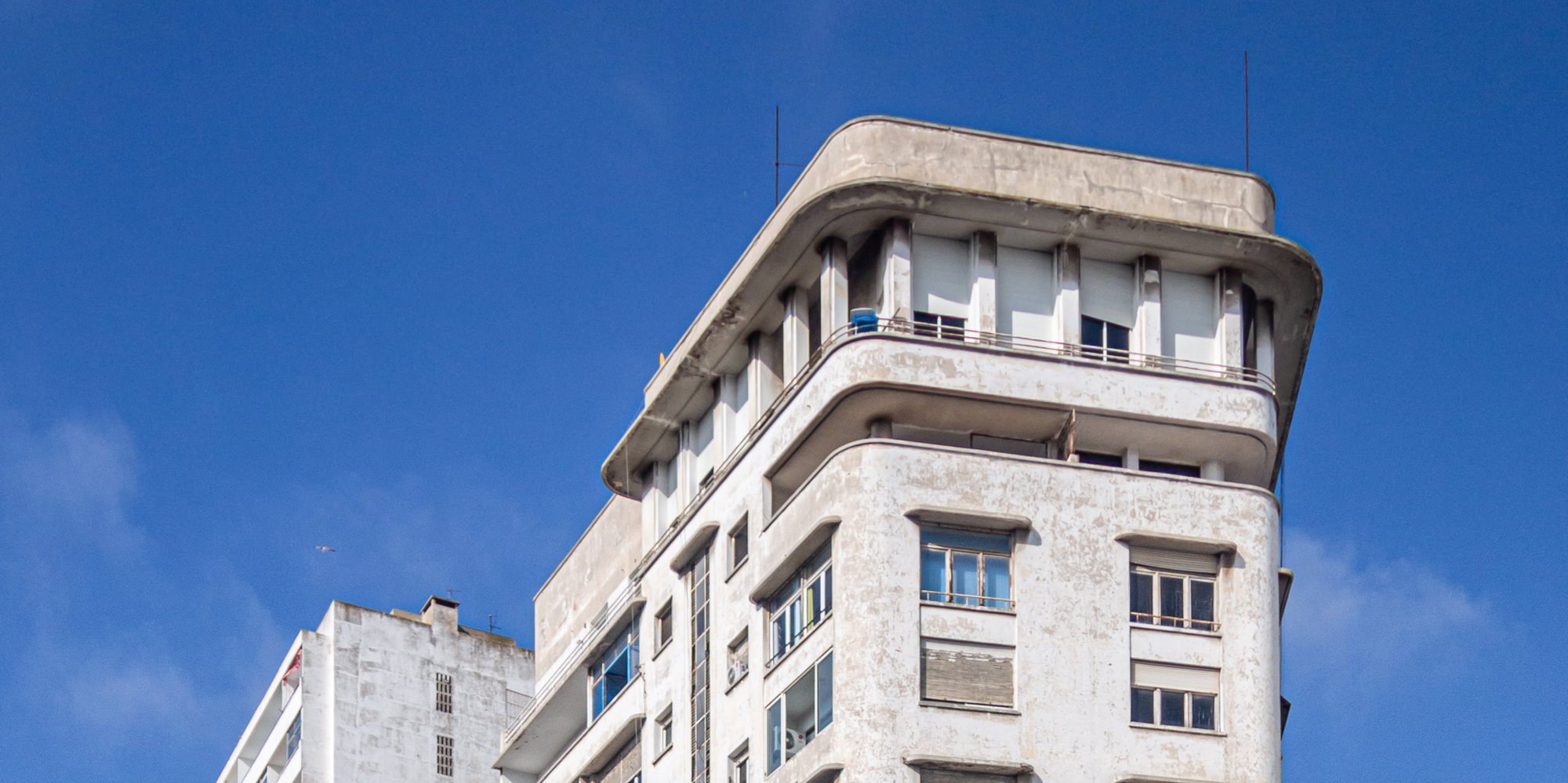
It was this city — begun again a thousand times, turned towards the sea, peopled in successive waves — that would receive, in 1930, the three towers of the Immeuble Assayag. Once you know the starting point, the daring of that undertaking takes on another dimension.
Frequently asked questions
Why does the city bear three names?
Anfa is the name of the medieval town; Dar el-Beïda (“the white house”) the one given after its rebuilding in the eighteenth century; Casablanca is the translation of it, popularised by Europeans.
When was the town destroyed?
In 1468, by the Portuguese. It would remain in ruins for close on three centuries.
Who refounded the town?
The sultan Sidi Mohammed ben Abdallah, from 1769 onwards, with the help of Genoese masters for the fortifications.
When did Casablanca reopen to international trade?
As early as 1784 by decision of the sultan, then lastingly from 1836 and above all after the treaty of 1856 with Great Britain.
Source: Jean-Louis Cohen and Monique Eleb, “Casablanca. Mythes et figures d'une aventure urbaine”, Éditions Hazan.

💬 Comments
No comments yet. Be the first!