
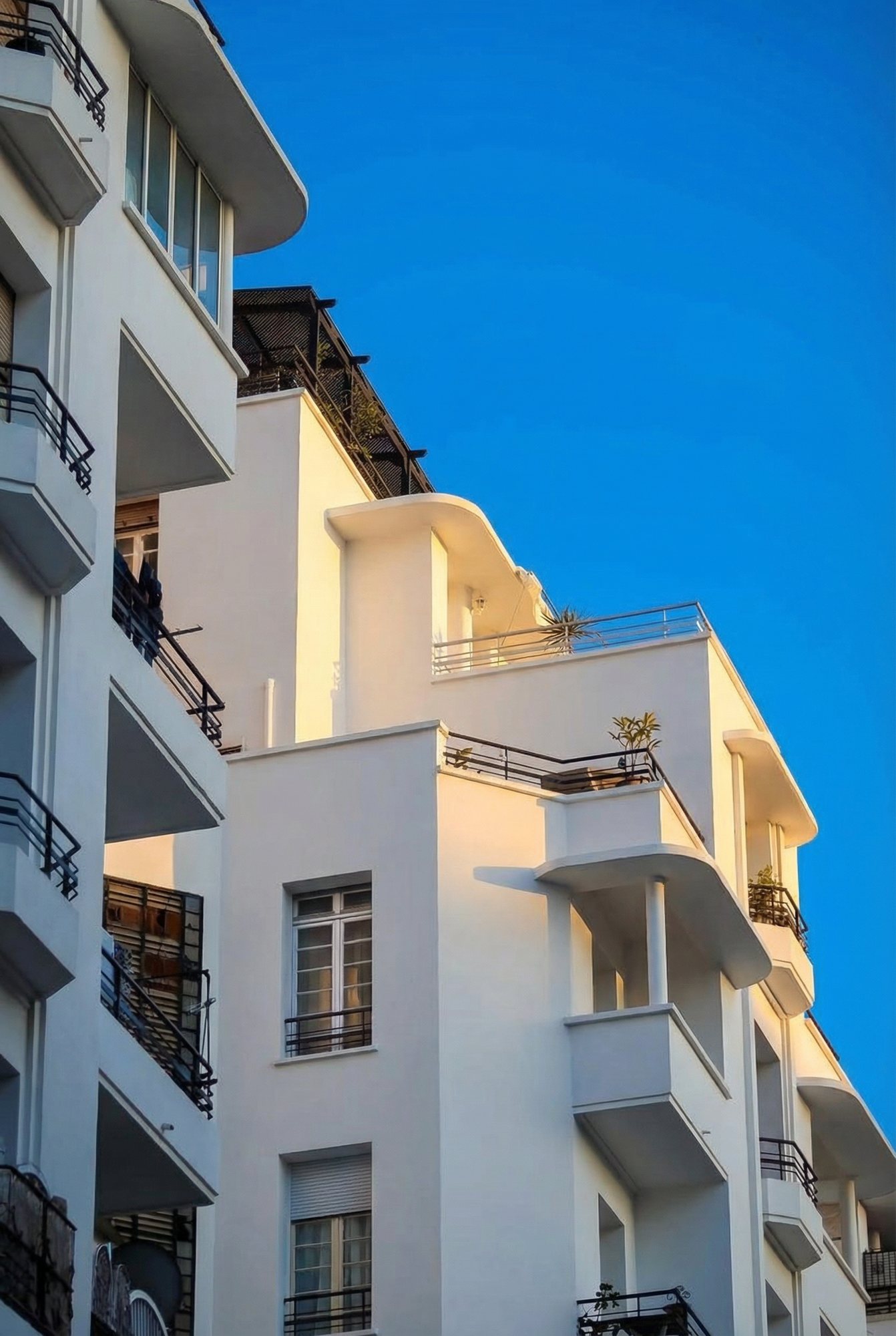
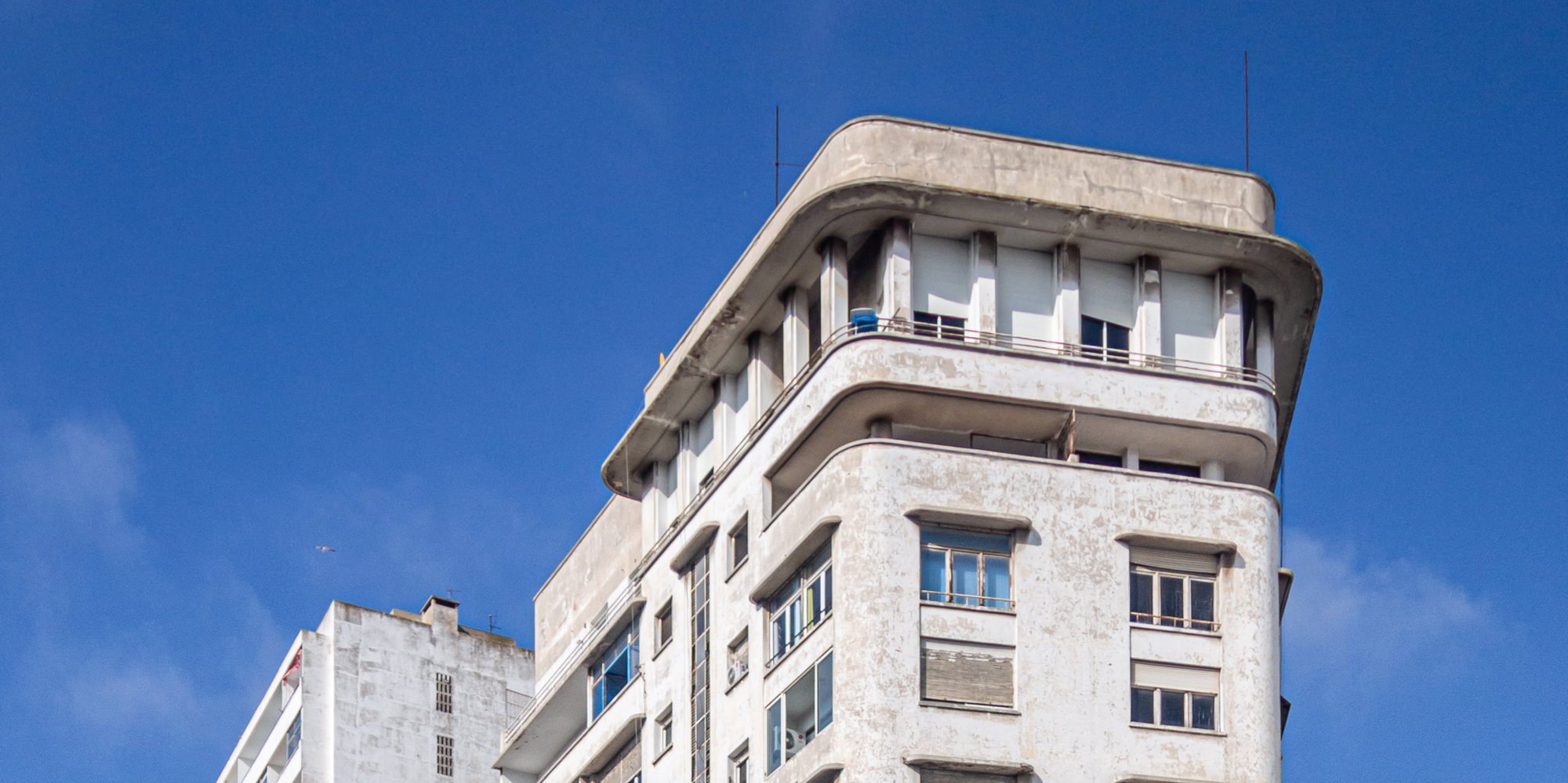
The Immeuble Assayag belongs to the ville nouvelle, the European-planned new town of the 1930s. But a few hundred metres away another Casablanca begins, an older one — the ancienne médina, singular among Moroccan medinas.
A town of fifty hectares
On the eve of the landing of 1907, Dar el-Beïda was contained within some fifty hectares girdled by walls and numbered about twenty-five thousand inhabitants. The proportions are surprising: the foreign colony came to no more than five hundred people, and yet it had already reshaped the town's economy.
The town was then divided into three quarters. Tnaker, to the north-west, where people from the countryside lived in reed dwellings. The mellah, the Jewish quarter assigned by the sultan Moulay Slimane at the beginning of the nineteenth century. And the best-appointed part, along the port and to the south of the wall, near Bab es-Souk — the gate opening on to the rest of the country.
A trading-post cosmopolitanism
It was in this third quarter that the foreigners' buildings were concentrated: the consulates of Spain, England, Germany and France, trading houses, but also five synagogues, a Spanish church, a Circolo Italiano, schools — among them those of the Spanish Franciscans and of the Alliance israélite universelle.
The detail tells the whole story: in a town of twenty-five thousand souls there were already four consulates and an Italian club. Casablanca was not a Moroccan town opening itself to foreigners; it was a port where several worlds had lived side by side from the outset.
Life in the medina around 1900
Accounts from the period bring back a harsh daily life. A European settled near the Spanish consulate described a town with neither paved streets nor public lighting: people went about at night with a lantern, at the risk of being fired on by the watchman. Everything was emptied into the street. One evening, coming home late, he stumbled over a camel asleep in the middle of the roadway and was flung into the mud by a kick.
Life, on the other hand, was strikingly cheap: the rent on the finest house in the town remained derisory beside European prices. That too is what drew the newcomers.
Façades that look on to the street
The architectural difference leaps to the eye of anyone who knows the towns of the interior. There, the façades are “blind”, turned towards the patio: the house shields itself from the outside. Here, open to foreign trade since the beginning of the nineteenth century and lived in by foreigners, the medina shows expressive façades, pierced with windows, adorned with doors and grilles — something of the air of Tangier or Essaouira.
Inside, on the other hand, the arrangement remained Moroccan: traditional salons and decoration, zellige rubbing shoulders with more modern facings. Two cultures are laid one over the other without contradiction — a way of doing things that would be found again, a generation later, among the clients who commissioned the ville nouvelle.
A laboratory of styles
The most striking thing is the mixture. In the medina, from the beginning of the twentieth century, there is neo-Moorish, Art Nouveau and Art Deco — languages that would later find their full expression in the ville nouvelle.
The medina is thus the rough draft of a style of writing that architects such as Marius Boyer would bring to maturity a few streets away. It can be read as the first page of the book of which the Assayag is a chapter.
What became of it
The history of the medina is not only a heritage matter. After 1907 its density rose sharply; in the 1920s the sanitary state of the mellah worried the authorities, who ordered partial demolitions, and some of the inhabitants moved to the ville nouvelle.
Unlike other Moroccan medinas, which remained apart from the building works of the twentieth century, the Casablanca medina was caught up in the movement of the modern city. That is what makes it endearing — and fragile.
Frequently asked questions
How big was the medina?
About fifty hectares girdled by walls, for some twenty-five thousand inhabitants in 1907.
What were its three quarters?
Tnaker to the north-west, the mellah (the Jewish quarter) and the best-appointed part, near the port and Bab es-Souk, where the consulates and the trading houses stood.
Why do its façades differ from those of other medinas?
Because the town was open to foreign trade and lived in by foreigners: the façades have windows and decoration, where the towns of the interior present blind walls.
What styles are found there?
A mixture of neo-Moorish, Art Nouveau and Art Deco, from the beginning of the twentieth century.
Source: Jean-Louis Cohen and Monique Eleb, “Casablanca. Mythes et figures d'une aventure urbaine”, Éditions Hazan.

💬 Comments
No comments yet. Be the first!