
At the corner of the avenue Poeymirau and the rue Léon l’Africain, a shop on the Assayag’s ground floor carried nothing, in the late 1930s, but a visiting card stuck to its window: “François Cogné, statuaire”. Behind the frosted glass, the sculptor of the Clemenceau on the Champs-Élysées was preparing the monument Casablanca was about to raise to Marshal Lyautey.
The city’s press kept track of that studio: a visit by the resident general in February 1937, a newspaper column in April, a full-page report in the autumn of 1938. Here is what it tells — and what is still to be found.
A shop window facing the cemetery
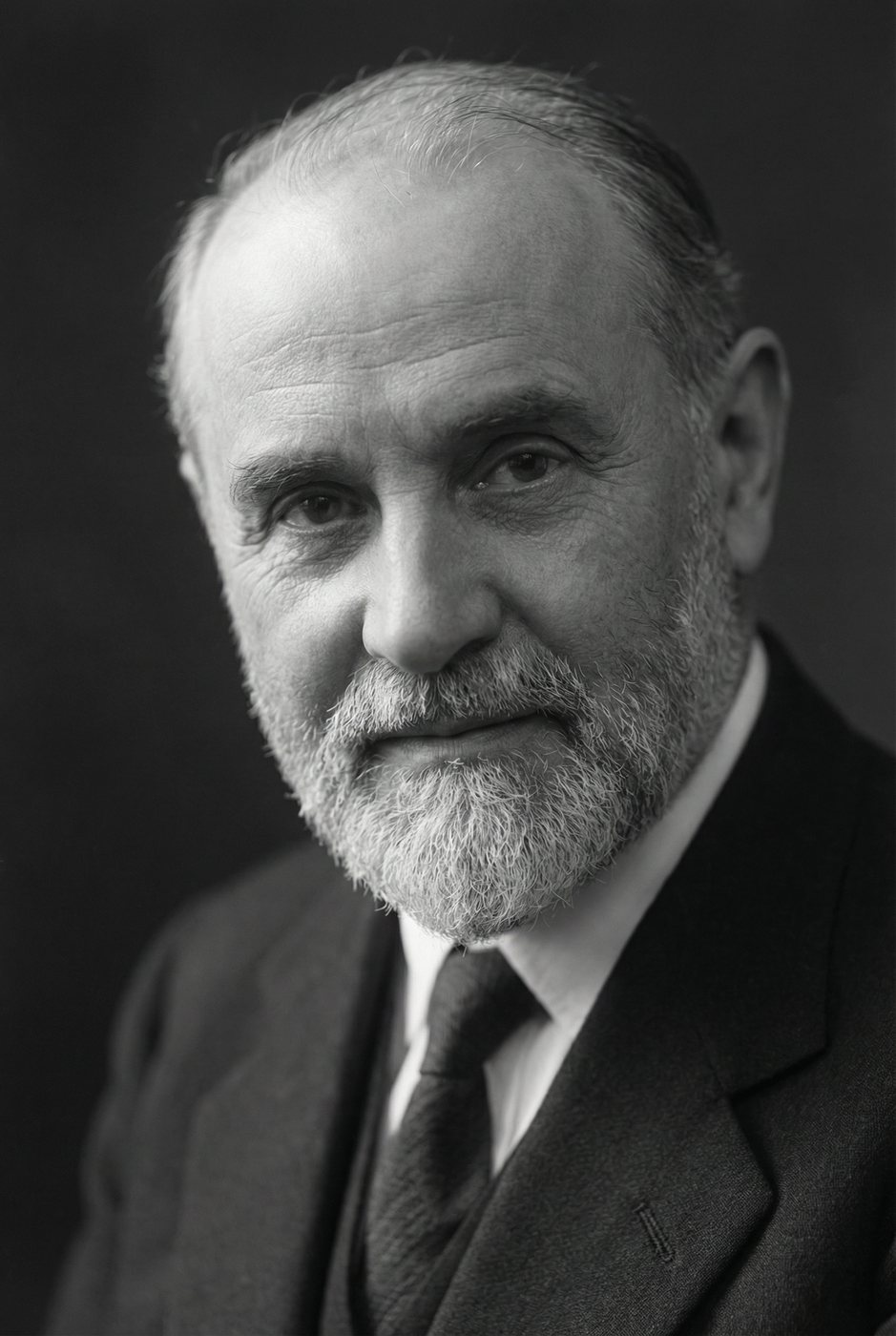
Le Petit Marocain of 22 October 1938 places the studio without hesitation: “At the corner of the avenue Poeymirau and the rue Léon l’Africain, opposite that immense field of the dead whose silence is never disturbed by the idle cries of humans, a shopfront like that of any store carries a visiting card stuck on the large window, with these simple words: François Cogné, statuaire.”
This is the building’s north-east corner. The door opened onto the rue Léon l’Africain, facing the cemetery that then lined the opposite pavement, a site now occupied by the CTM bus station. The avenue Poeymirau has become the rue Hassan Seghir.
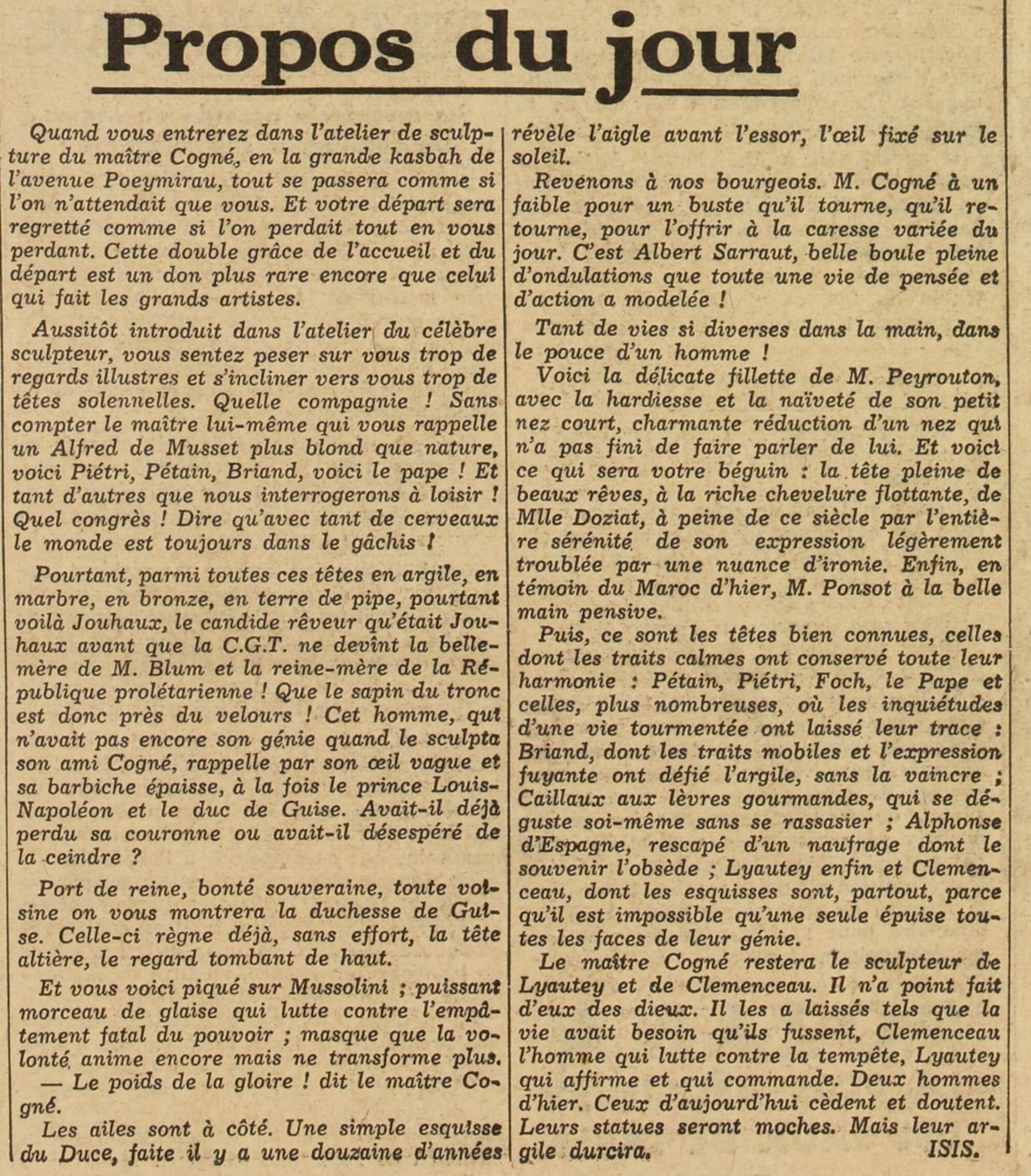
Eighteen months earlier, the same paper’s columnist, who signed himself ISIS, had found another image: the studio stood, he wrote, “in the great kasbah of the avenue Poeymirau”. The great kasbah is the Assayag.
The sculptor of Clemenceau
François Cogné was born in 1876 in Aubin, in the Aveyron. Trained at the École des Beaux-Arts in Paris, he made his name in portraits and public monuments; his Clemenceau, unveiled on the Champs-Élysées in 1932, made him famous. In 1938 the Petit Marocain described him as “a graduate of the City of Paris, former pupil of the Beaux-Arts, pupil of Barrias, medallist of the Artistes français”, a commander of the Legion of Honour and the author of seventeen monuments, among them “Le Victorieux” at the Residency in Rabat.
He had known Lyautey for a long time. The issue La Vigie marocaine published for the unveiling reproduces a photograph the Marshal had inscribed to him in 1926, signing himself his “admirer and friend”.
A first journey, in 1934
Cogné discovered Morocco at the end of 1934. On 1 December La Vigie marocaine announced that he was sailing that very day on the Djenné, won over by Meknes, by Fez and above all by Marrakech, where the pasha had received him: “François Cogné, like Delacroix, found in them the Romans and the Greeks.” He promised to come back, and for several months.
Six months in Casablanca
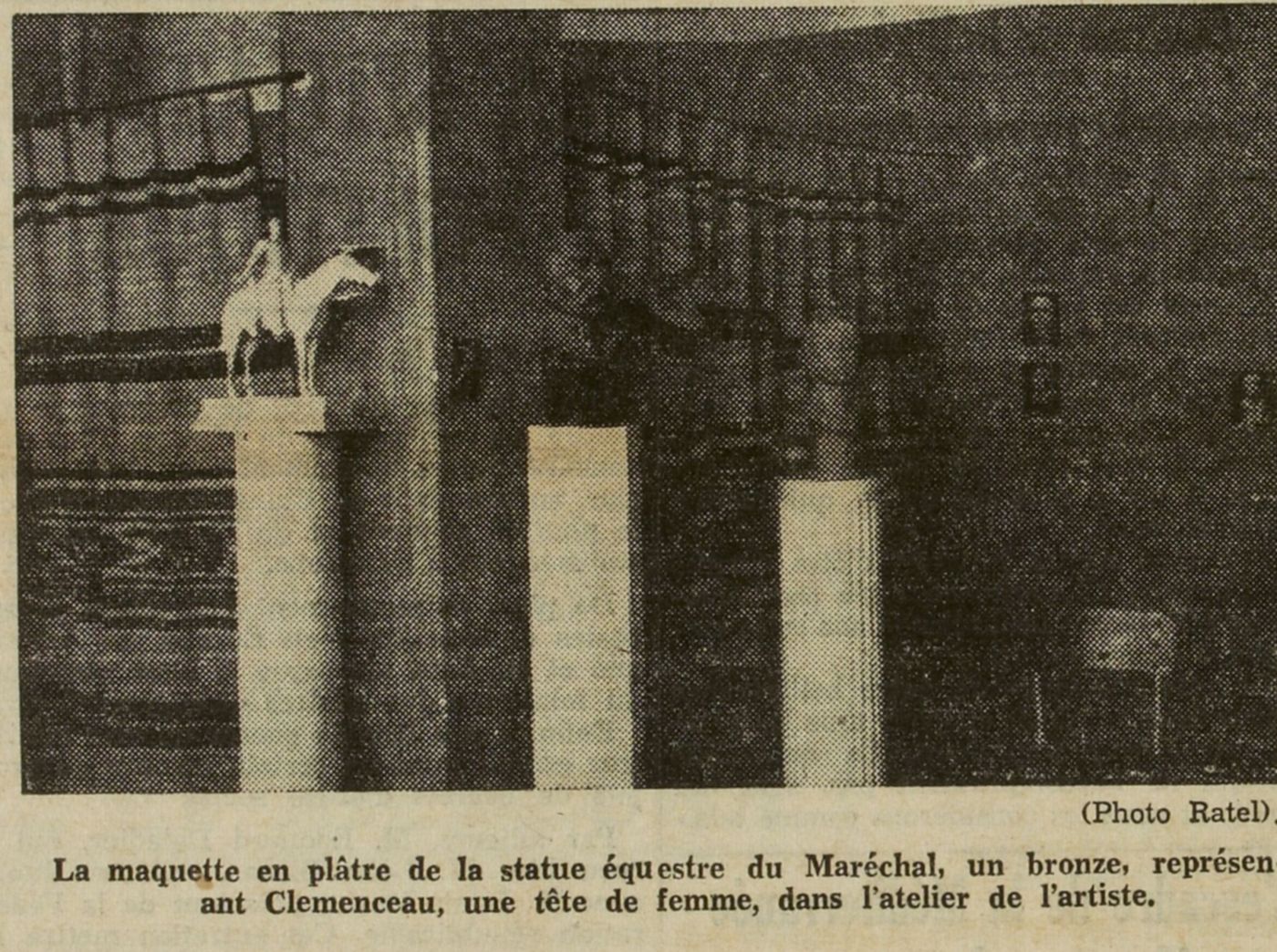
He came back at the end of 1936, commissioned to make the equestrian statue of Lyautey that the Comité Lyautey was raising by public subscription. It was in the Assayag shop that he worked: there he drew and modelled the maquette of the statue and the seven bas-reliefs intended for the pedestal.
On 18 February 1937, at about three in the afternoon, General Noguès, resident general since the autumn of 1936, came to see him on a visit that was “outside protocol, and surrounded by the strictest incognito”. The next day the Le Petit Marocain described the scene: “Soon the procession of official cars arrived in front of the Immeuble Assayag, where the master’s studio is.” The Comité Lyautey’s board was waiting for the resident around the sculptor.

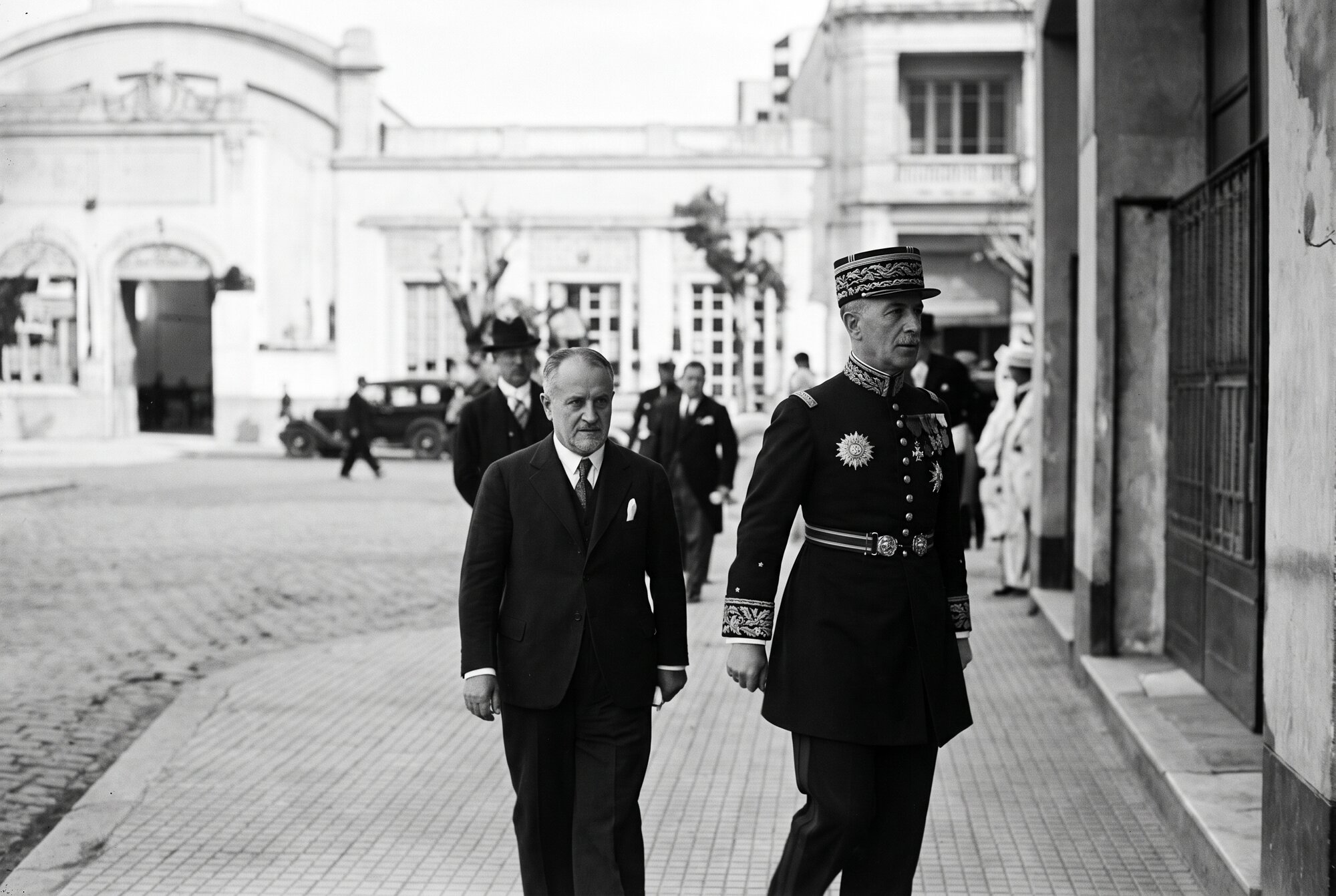
Noguès lingered over the maquette: Lyautey on horseback, “holding his baton, kepi on his head and wearing the long greatcoat”. Then over the bas-reliefs, which illustrate famous sayings of the Marshal: Lyautey embracing a Moroccan chief, the country’s crafts, the produce of the land, partisans on horseback, doctors at work in their hospital, a group of officers, a corner of the port in full activity. Cogné described the intended setting: the garden in front of the law courts would be redesigned to show the bronze at its best.
The same issue announced a gesture. Cogné had told M. Courtin, head of the municipal services, that he wished to give the City of Casablanca, “in memory of his stay, the original of the head of the statue of Clemenceau”.
Other visitors followed. On 27 May 1937, announcing his departure, the Le Petit Marocain mentioned “his studio on the avenue Poeymirau where so many prominent people, among them Madame la Maréchale Lyautey, came to admire his work during long visits”. Two days later he sailed on the Djenné for Marseille, before going on to London, where a bust of the King of England awaited him.
The great kasbah of the avenue Poeymirau
Meanwhile, on 30 April 1937, ISIS had devoted his “Propos du jour” to the studio. He describes an assembly of heads: “When you enter the sculpture studio of Maître Cogné, in the great kasbah of the avenue Poeymirau, everything will happen as if they were waiting only for you.” All around, busts in clay, marble, bronze and pipeclay: Clemenceau and Lyautey everywhere, Foch, Briand, Caillaux, Pétain, Mussolini, Pope Pius XI, Albert Sarraut, the former resident general Ponsot. The master himself reminded the columnist of “an Alfred de Musset blonder than life”.
The column ends with a prediction: “Maître Cogné will remain the sculptor of Lyautey and of Clemenceau.”
How a bas-relief was born
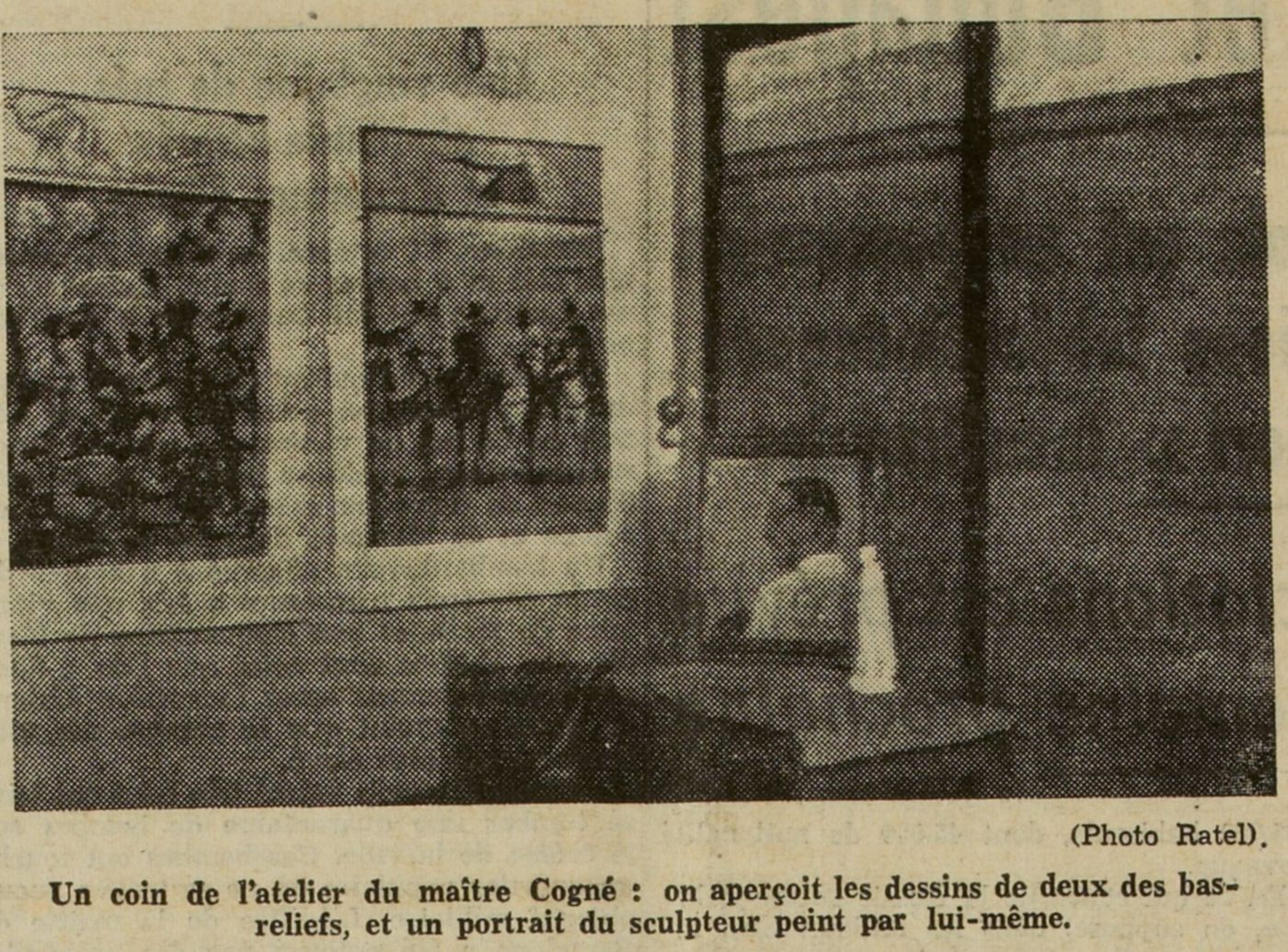
In the autumn of 1938, on the eve of the unveiling, a reporter from the Petit Marocain spent “an hour in François Cogné’s studio”. The sculptor showed him how the bas-reliefs had come into being. First, tiny charcoal sketches, started again “ten times, twenty times”. Then the drawing projected at full size: “along the walls of the studio, the seven drawings of the seven bas-reliefs” were still there. Next, a small plaster plaque about ten centimetres across, on which the subject was carved in relief. Finally the clay, “applied in a thick layer against the wall”, kneaded with thumb and spatula, while “the water thrown on the work spurts everywhere, soiling the tiled floor on which it falls back in a muddy rain”.
The bas-reliefs of the monument on the place Lyautey thus took shape against a wall of the Assayag, on the tiled floor of a shop.
Among the busts
The visit went on among the works: “a bronze Clemenceau puts on his tiger’s look”, a young woman who seems to hold “all the graces of the eighteenth century”, Albert Sarraut “waiting to be given a pedestal”, a trio of athletes in lost wax, the Marshal “standing, in a bust, on horseback”. The reporter finally stopped before a painted portrait, of the sculptor’s mother: Cogné painted too.
From plaster to bronze
The statue itself was not enlarged at the Assayag. Cogné tells the story in La Vigie marocaine of 5 November 1938: the maquette had been shown for a fortnight in the newspaper’s hall, then, “after the visit that Madame la Maréchale Lyautey and General Noguès kindly paid to my studio”, he left for Paris “taking this first maquette with me”. There, from May to the end of July 1937, he studied a quarter-scale model, one metre ten high, from a horse lent by the Vincennes cavalry school. His assistants then enlarged it four times; the clay statue, four tonnes of earth, was finished on 9 March 1938. The casting went to the Barbedienne foundry.
5 November 1938
Cogné came back to Casablanca for a few days in January 1938 to settle the pedestal works with the municipality, then left again on the Chellah. In October the bronze arrived. On the 21st, two huge wooden sheer-legs were raised on the place Lyautey to hoist the pedestal, four tonnes, then the statue, three and a half; “the crowd was again large yesterday around the equestrian statue of the Marshal”, the next day’s Petit Marocain noted.
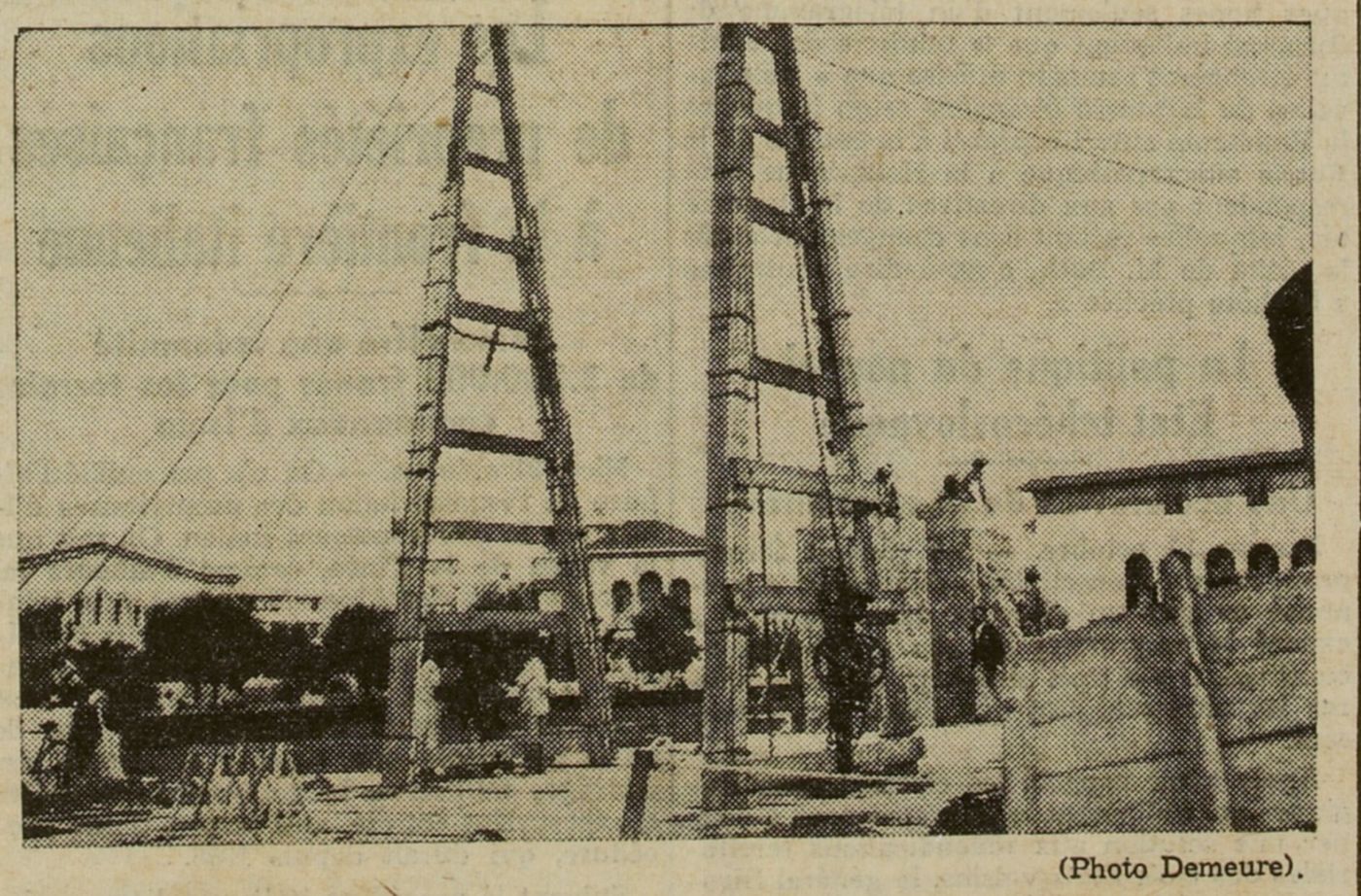
The monument was unveiled on 5 November 1938 in front of the law courts, in the presence of Sultan Sidi Mohammed ben Youssef, General Noguès and the Maréchale Lyautey.
Afterwards
In June 1939 ISIS still remembered having glimpsed, “in the studio of Maître François Cogné, on the ground floor of the Immeuble Assayag”, the bust of Pope Pius XI. It is the last mention of the studio we have found.
Under the Occupation, Cogné became the official sculptor of the Vichy regime: his bust of Marshal Pétain was meant to replace the Marianne in town halls. He died in Paris in 1952.
The statue of Lyautey left the square in April 1959 for the garden of the French consulate general, from where it can still be seen from today’s place Mohammed V.
What we are still looking for
- The head of Clemenceau. Offered to the City in February 1937: was it accepted, displayed, kept? We have found no trace of it.
- The dates of the lease. Cogné was working there by February 1937 at the latest; his card was still on the window in October 1938. When did he arrive, and when did he leave?
- A photograph of the shop window. The reporters photographed the inside, never the frontage.
- The seven drawings for the bas-reliefs, hanging on the studio walls in 1938.
Before Cogné, the same corner of the building had housed, in 1935, the studio of a woman sculptor, Mlle de Blonay: we tell that story on the page “The Assayag’s studios”. The photographs and press cuttings are gathered in the album “François Cogné’s studio”. If you know anything about this shop, write to us.
Frequently asked questions
Where was François Cogné’s studio in Casablanca?
On the ground floor of the Immeuble Assayag, in the corner shop at the avenue Poeymirau (today’s rue Hassan Seghir) and the rue Léon l’Africain, opposite the site of today’s CTM bus station. Le Petit Marocain says so in February 1937, in October 1938 and in June 1939.
What did he make in that studio?
The maquette of the equestrian statue of Marshal Lyautey and the seven bas-reliefs of its pedestal, during a six-month stay from the end of 1936 to late May 1937. The statue itself was enlarged and cast in Paris.
Where is the statue of Lyautey today?
Unveiled on 5 November 1938 in front of the law courts, it was moved in April 1959 to the garden of the French consulate general, where it can still be seen from the place Mohammed V.
Sources: Le Petit Marocain, 19 February 1937 (pp. 1 and 5), 30 April 1937, 27 May 1937, 29 January 1938, 22 October 1938, 2 June 1939; La Vigie marocaine, 1 December 1934 and 5 November 1938 (pp. 17–18), all on Gallica; the Wikipedia article “François Cogné”; Alexandre Aublanc, “La statue de Lyautey et la France de Vichy”, 2020. Translations from the French are ours.


💬 Comments
No comments yet. Be the first!